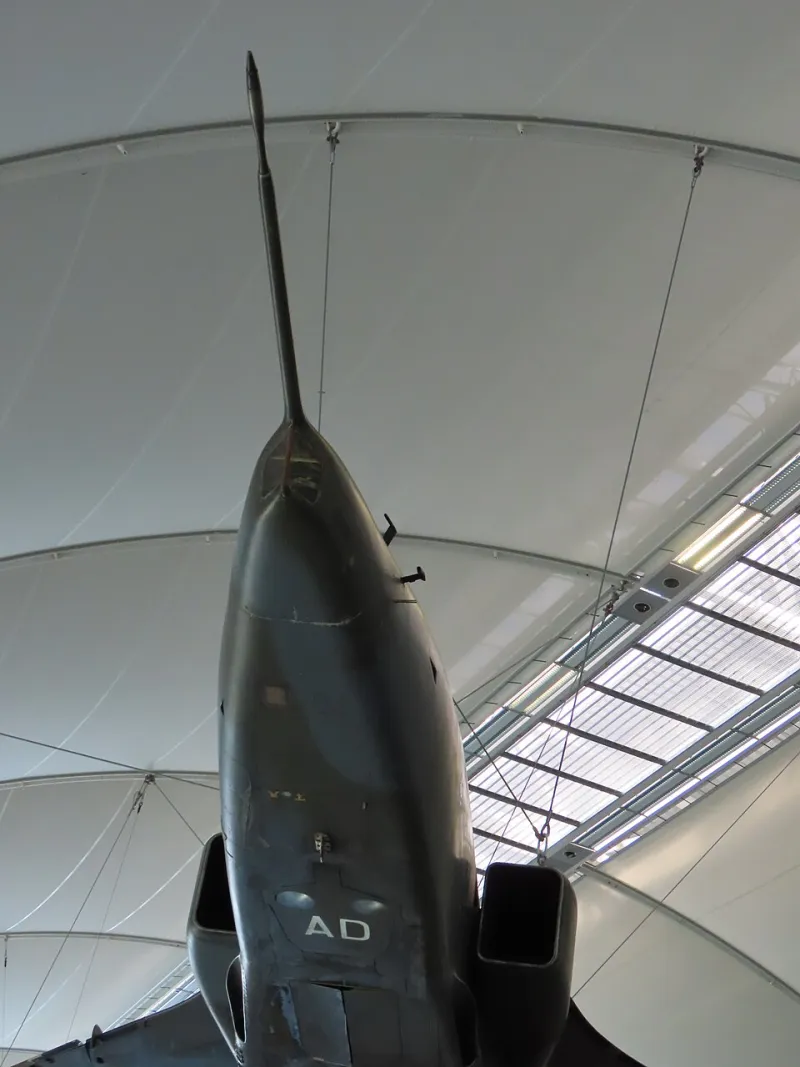
What Remains, and Where: Britain's Jaguar Airframes in 2026
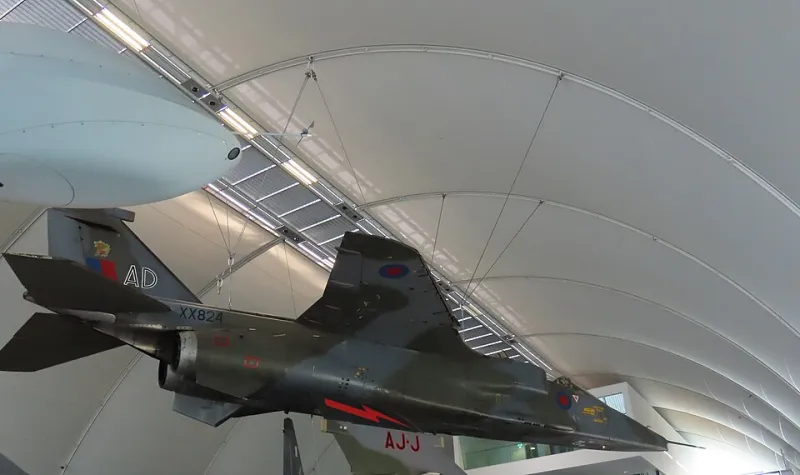
Photo: [[User:Ad Meskens|Ad Meskens You are free to use this picture for any purpose as long as you credit its author, Ad Meskens. Example: © Ad Meskens / Wikimedia Commons If you use this work outside of the Wikimedia projects, a message or a copy is
The RAF's Jaguar force left front-line service in 2007, but the airframe did not disappear. In 2026 the British survivor list is a mixture of complete museum exhibits, outdoor gate guardians, instructional airframes and private holdings. It is not a tidy roll call. It is a preservation landscape that rewards patience, prior research and a photographer's respect for barriers.
This survey is intended as an evergreen visitor's guide and a condition audit. It does not claim to list every last piece of Jaguar structure in the country. Instead it sets out the three tiers in which British Jaguars survive, the questions a visitor should ask before travelling, and the details that markings and airframe condition can still reveal.
The museum tier
The most accessible airframes are those held by national, accredited and independent museums. The RAF Museum's collections, Newark Air Museum, the Yorkshire Air Museum, the City of Norwich Aviation Museum, the Boscombe Down Aviation Collection and the Gatwick Aviation Museum are among the institutions where Jaguars or major Jaguar components have been displayed. Between them they cover single-seat strike airframes and two-seat trainers, and they vary sharply in presentation.
An indoor airframe is not automatically a well-preserved one. Museum storage is often stable but crowded, and an aircraft may be displayed without its original stores, pylons or avionics bays open to view. An outdoor airframe is more exposed to the British climate but may retain more of its external identity. For the visitor, the practical question is not simply 'is there a Jaguar here?' but 'what can I actually see, and what has been removed?'
Photographers should expect mixed lighting. Hangar floors can be dark, while outdoor examples may be surrounded by fencing, plant or other aircraft. A telephone call or a check of the museum's website before travelling remains essential, particularly where an airframe is in store rather than on public display.
Gate guardians and station memorials
A significant number of British Jaguars survive as gate guardians or station memorials. Some stand at RAF stations or former station heritage centres; others are held by businesses, cadet units or local organisations with a link to the type. These airframes are often the most evocative, because they remain outdoors in the weather and in the landscape where the Jaguar once operated.
They are also the most vulnerable. An outdoor airframe faces corrosion in fasteners and bays, canopy seal degradation, water ingress and paint failure. Intake and exhaust blanks help, but they are not a substitute for regular inspection. A repaint can improve appearance while erasing evidence: squadron codes, stencil marks, mission marks and the subtle variation between original and restored finishes.
For the preservation audit, the gate guardian tier deserves close attention. An airframe that is structurally complete but cosmetically tired may be a better long-term candidate than a smartly repainted example with undocumented structural changes. The difference matters when a collection later seeks to interpret the aircraft accurately.
Private holdings and stored airframes
Less visible are the private collections, storage sites and partial airframes held for spares, instruction or future restoration. These are not generally visitor attractions, and access depends on the owner's willingness. They nevertheless form part of the national survivor base. Some may be complete aircraft in need of major work; others may be composites assembled from several airframes.
A responsible survey should treat private holdings cautiously. Publicising exact locations can create security and insurance problems. The better approach is to record the existence and condition of significant airframes with the owner's consent, and to encourage a national register rather than a treasure-hunt list.
What the markings still tell us
Jaguar markings are not decoration. They record squadron identity, station affiliation, exercise participation and, in some cases, special schemes applied for anniversaries or farewells. A careful photographer should record the whole airframe, not just the nose: squadron badges, codes, serial presentation, stencil data, stores pylons and any evidence of previous paint layers.
Camouflage and finish also tell a story. Different airframes show the shift from early schemes to later grey finishes, and from unit-level variation to more standardised presentation. Where a museum has restored an aircraft, the archive value lies in comparing the current finish with contemporary photographs. That comparison can reveal what was original, what was inferred and what was simply unavailable.
A visitor's checklist
Before travelling, confirm opening hours, whether the airframe is indoors or outdoors, and whether photography is permitted. Carry a lens suitable for detail as well as a wide lens for the full aircraft. Record the serial and any visible unit markings. Do not touch the airframe, climb on it or move barriers. Where an aircraft is outdoors, note corrosion, canopy condition and the presence or absence of blanks; these observations are useful to collections and to the wider archive.
The British Jaguar survivor list in 2026 is smaller than the fleet that once operated from Coltishall, Bruggen and Laarbruch, but it is not negligible. Its value lies in variety: the museum example, the gate guardian, the stored airframe and the private project each preserve a different part of the story. The task for the archive is to record them before the next repaint, the next move or the next disposal changes the evidence.