Two Nations, One Airframe: SEPECAT and the Compromises That Made the Jaguar
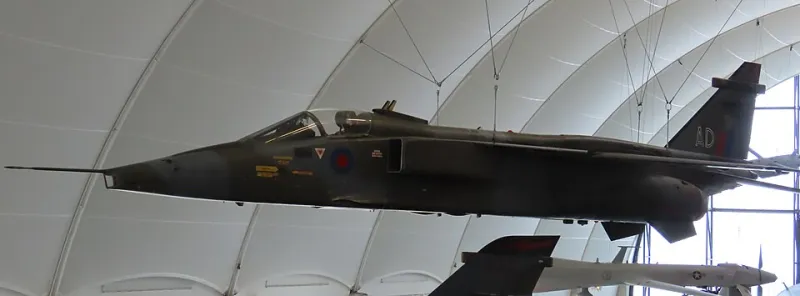
Photo: [[User:Ad Meskens|Ad Meskens You are free to use this picture for any purpose as long as you credit its author, Ad Meskens. Example: © Ad Meskens / Wikimedia Commons If you use this work outside of the Wikimedia projects, a message or a copy is
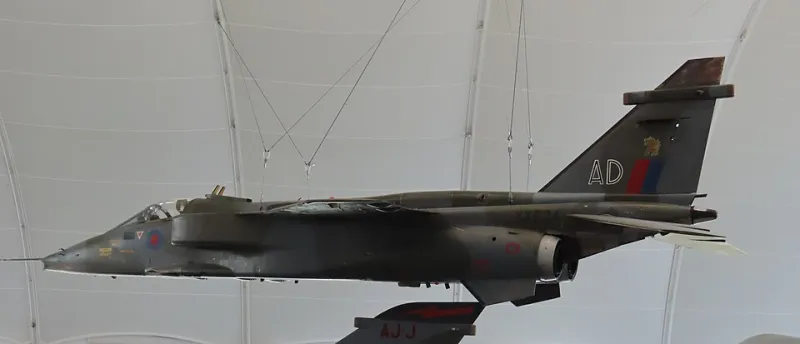
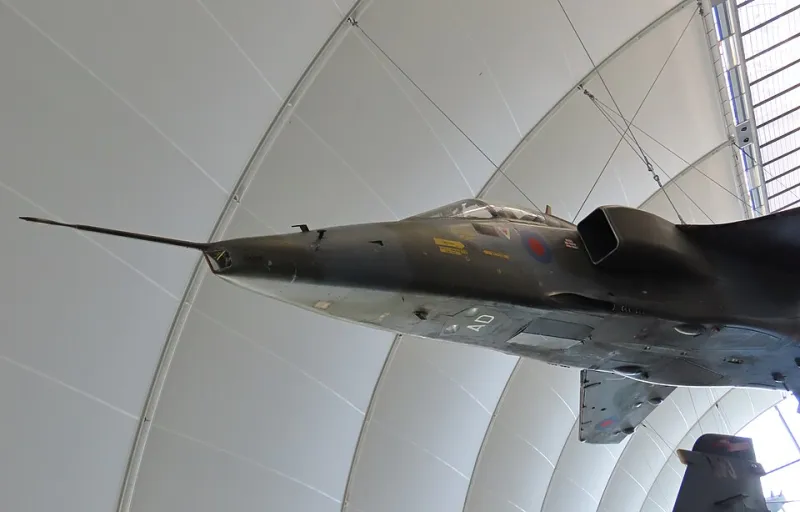
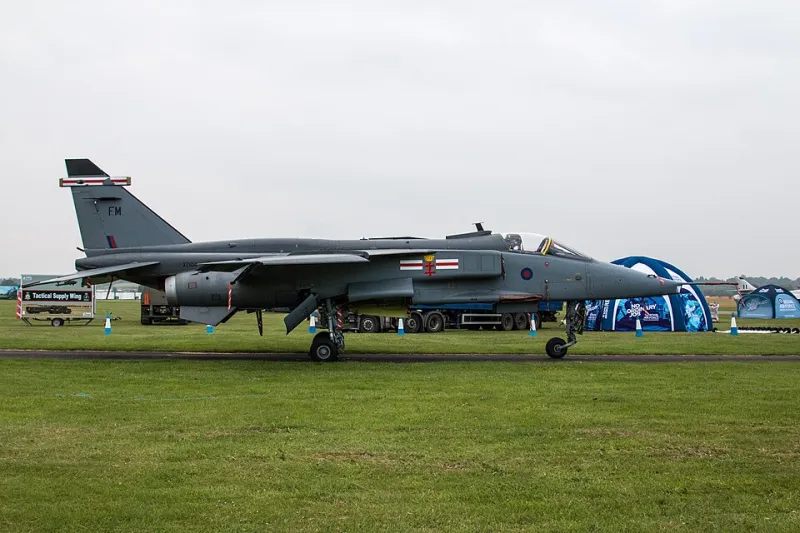
The SEPECAT Jaguar is often described in shorthand as an Anglo-French aircraft, a phrase that captures the outcome but hides the bargain. SEPECAT was a consortium with a political brief as much as an engineering one. Its name on the Jaguar's tail is a reminder that the aircraft was shaped by two national requirements, two industrial bases and a shared desire to justify a costly collaborative programme. Archive material from the period, together with the published programme history, shows how those pressures produced both the Jaguar's strengths and its compromises.
A consortium with a political brief
In the 1960s both Britain and France were looking for ways to rationalise their aircraft industries and to share the rising cost of military aviation. The result was SEPECAT, the Société Européenne de Production de l'École de Combat et d'Appui Tactique, formed in 1966 by British Aircraft Corporation and Breguet. The acronym described a European company for the production of a combat and tactical support trainer, which was exactly the ambiguous brief the partners needed. It could be presented as a trainer programme in one capital and a light strike programme in another.
The workshare was broadly balanced, with airframe production and final assembly divided between the two countries. That balance was politically necessary. Neither government could easily explain a programme in which the other side secured the larger share of high-value work. The engine was similarly joint, with Rolls-Royce and Turbomeca collaborating on the Adour. The arrangement was elegant on paper, but it meant that every technical decision had to survive two sets of industrial expectations.
Two requirements, one airframe
The RAF wanted an advanced trainer and a tactical strike aircraft. France wanted a trainer and a light attack type. The compromise was a tandem two-seat aircraft with a high wing, a rugged undercarriage for rough-field operation and a substantial external stores capability. The over-wing pylons, a distinctive Jaguar feature, reflected the demand for carriage without sacrificing ground clearance. The gun pack and the low-level navigation and attack equipment reflected the strike mission that both air forces expected to perform.
The design was not a simple average of the two requirements. It leaned towards the strike role because the aircraft had to carry useful ordnance over tactical ranges, and it retained trainer qualities because the tandem cockpit was central to the original brief. That dual identity helped the export story but complicated the engineering. A trainer needs benign handling and a clear instructor view; a strike aircraft needs stability at low level, robust systems and a useful payload. The Jaguar had to do both within one airframe.
The engine and the workshare bargain
The Adour engine was one of the programme's most important compromises. It was a joint Rolls-Royce and Turbomeca design, and its performance shaped the Jaguar's reputation. Early aircraft were regarded as underpowered in some conditions, particularly when carrying heavy stores or operating from hot and high airfields. Later upgrades improved matters, but the basic constraint remained: the Jaguar was a robust and accurate low-level attack aircraft rather than a sparkling performer.
Workshare also influenced the aircraft's development rhythm. Because production and final assembly were split, changes had to be coordinated across two industrial systems. The British and French aircraft were not identical in every respect, and national equipment preferences produced variations in avionics and stores. These differences were manageable, but they added cost and complexity. The programme's archive trail is therefore not a single line of development but two parallel lines that had to be kept in step.
Export ambitions and national realities
Both partners hoped that the Jaguar would win substantial export orders. In practice, the export record was respectable but uneven. India became the largest export customer, producing the type under licence with Hindustan Aeronautics Limited. Oman, Nigeria and Ecuador also operated Jaguars. These orders mattered because they spread the programme's costs and validated the aircraft's rugged, maintainable design. They also reinforced the political argument that collaborative programmes could deliver industrial returns.
National realities intruded. France's naval Jaguar M was cancelled, removing one potential branch of the programme. The merger of Breguet with Dassault changed the industrial landscape. The RAF's order was affected by defence reviews, and the type's operational career was shaped by changes in British defence policy. By the time the Jaguar became a familiar sight at RAF Coltishall and other stations, the programme's original political assumptions had already been overtaken by events.
Reputation in RAF service
The RAF operated the Jaguar from 1973 until 2007. It became known as a low-level strike and reconnaissance aircraft with excellent navigation and attack accuracy, a robust structure and a useful ability to operate from dispersed airfields. Its service in the 1991 Gulf War demonstrated that the type could deliver precision attacks in a demanding environment. Later operations and upgrades kept it relevant, but the fundamental compromises remained visible: cramped cockpits, limited thrust growth and a range that required careful planning.
Those compromises are not a criticism of the design so much as a description of its origins. The Jaguar was built to satisfy two governments, two air forces and two industries. It succeeded because the partners found a shape and a programme that could accommodate their different priorities. The name on the tail is therefore more than a manufacturer's mark. It records a bargain that produced a capable, durable and distinctly European combat aircraft, one whose RAF career was shaped as much by politics and workshare as by aerodynamics.