Drawing Board Jaguars: RAF Reconnaissance, Maritime and Strike Studies That Never Flew
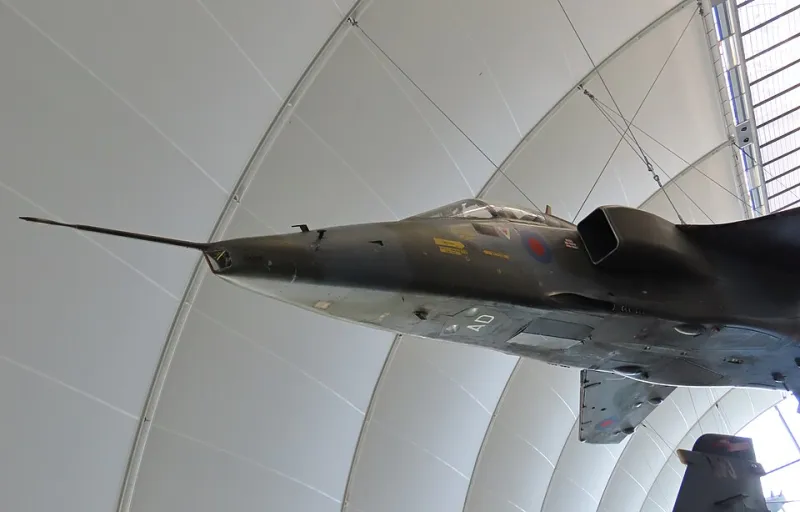
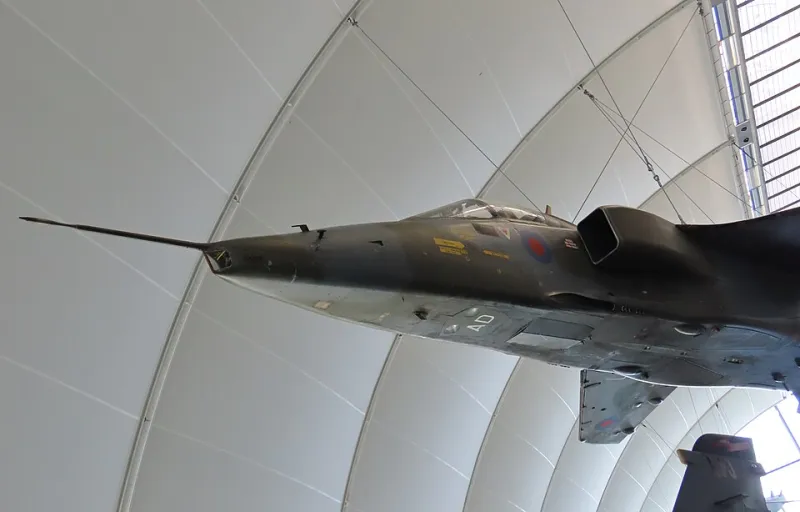
Photo: [[User:Ad Meskens|Ad Meskens You are free to use this picture for any purpose as long as you credit its author, Ad Meskens. Example: © Ad Meskens / Wikimedia Commons If you use this work outside of the Wikimedia projects, a message or a copy is
The Jaguar files at sepecat.info are not only a record of aeroplanes that flew. They also preserve a shadow fleet: studies, project drawings and requirement papers for RAF Jaguars that were examined, costed and then set aside. In 2026, with the type long retired from UK service, those paper projects remain useful because they show how the RAF defined the Jaguar's limits and how Whitehall balanced specialist roles against the Tornado programme.
The baseline that shaped every study
The RAF's operated Jaguars provide the reference point. The GR.1 was a low-level day strike aircraft built around two Rolls-Royce/Turbomeca Adour engines, a compact fuselage, twin 30 mm cannon and a useful but finite payload. The GR.1A introduced the Ferranti laser rangefinder and marked target seeker in the nose, while the GR.3 and GR.3A added further avionics and weapon options, including precision-guided munitions and, later, TIALD carriage. The two-seat T.2 and T.4 trained crews in the same demanding low-level environment.
Every specialist study ran into the same physical realities. The Jaguar had limited internal volume for avionics, modest electrical and cooling capacity, and a wing optimised for low-altitude ride quality rather than long endurance. The baseline was excellent at what it was designed to do; it was not a large growth platform. Archive drawings for reconnaissance, maritime and strike projects all show attempts to work within those constraints - or to argue that the constraints could be bought out.
Reconnaissance: camera nose versus pod
The most persistent paper project is the dedicated reconnaissance Jaguar. Requirement documents from the 1970s and early 1980s examined a tactical reconnaissance capability to succeed older Canberra and Phantom arrangements. Manufacturer drawings show a camera nose study, with oblique and vertical installations replacing or displacing the standard nose avionics, together with revised cockpit controls and environmental provisions. Alternative schemes retained the standard nose and used a centreline reconnaissance pod.
The pod option was the more flexible. It allowed the same airframe to switch between strike and reconnaissance, avoided a separate fleet and kept the Jaguar's cannon and payload stations available. The camera-nose study offered better integration and potentially better fields of view, but at the cost of a sub-fleet, additional maintenance and a training burden. In the event, the RAF's dedicated tactical reconnaissance effort moved towards the Tornado GR.1A, while podded reconnaissance remained part of the wider inventory. The Jaguar reconnaissance study therefore reveals a familiar procurement argument: specialised airframes are efficient in role but expensive in fleet management.
Maritime: Sea Eagle and the two-seat question
The anti-shipping file is more ambitious. Archive material records studies of a Jaguar maritime strike variant carrying Sea Eagle anti-ship missiles, with associated radar and mission avionics. The concept was not absurd. The Jaguar was fast at low level, had a stable weapons platform and could operate from dispersed bases. But maritime strike demands range, endurance, sensor performance and crew capacity. A single-seat Jaguar crew already had a heavy workload in the low-level strike role; adding a long over-water sortie, radar search and missile management pushed the aircraft towards a two-seat solution.
That two-seat maritime Jaguar would have competed directly with the Buccaneer, which already carried Sea Eagle in RAF service, and later with the Tornado GR.1B. The Buccaneer had greater range and payload; the Tornado offered all-weather avionics and a more modern systems architecture. The Jaguar maritime study therefore fell away not because the aircraft could not carry the missile, but because the RAF already had larger and more suitable maritime platforms. The file is a reminder that aircraft procurement is rarely about a single aeroplane's capability; it is about the capability of the whole fleet.
Specialist strike: beyond the day attacker
A third group of proposals examined a specialist strike Jaguar with improved navigation and attack, night and all-weather capability, and stand-off or anti-radiation weapons. These studies sit awkwardly between the Jaguar's original day strike role and the Tornado's all-weather interdiction mission. The Jaguar could be given better avionics, but the aircraft's size and power margins made every addition a compromise. Terrain-following radar, a larger mission computer, electronic warfare equipment and additional cooling all competed for the same cramped bay space.
The Tornado programme was the decisive factor. The RAF's Cold War priority was a survivable, all-weather interdiction aircraft for the Central Front, supported by air defence and maritime strike capabilities. Jaguar was valued as a affordable day attacker, but it was not the natural platform for a further specialist strike fleet. The requirement papers show a service aware of the Jaguar's strengths and unwilling to pretend that it could become something much larger.
What the drawing board reveals
These studies are not footnotes to failure. They show a procurement culture weighing specialised capability against fleet commonality. Reconnaissance could be podded; maritime strike belonged to larger aircraft; specialist strike belonged to Tornado. The Jaguar that never was therefore explains the Jaguar that was: a compact, demanding and effective low-level strike aircraft that served within clear boundaries. For historians, the archive drawings are valuable precisely because they record the boundaries being tested.