Sand, Sorts and Sidewinders: The Jaguar Force's Road to Granby
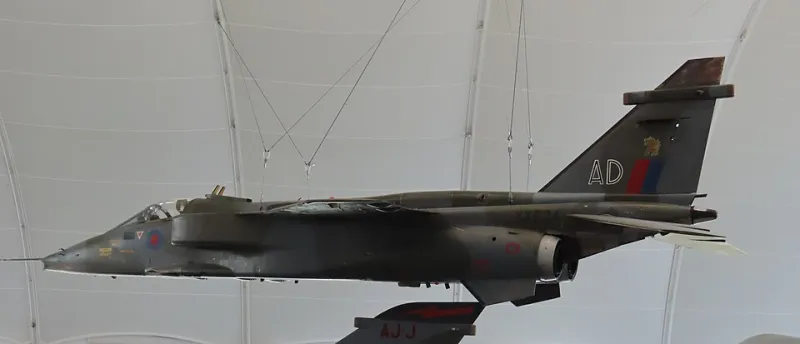
Photo: [[User:Ad Meskens|Ad Meskens You are free to use this picture for any purpose as long as you credit its author, Ad Meskens. Example: © Ad Meskens / Wikimedia Commons If you use this work outside of the Wikimedia projects, a message or a copy is
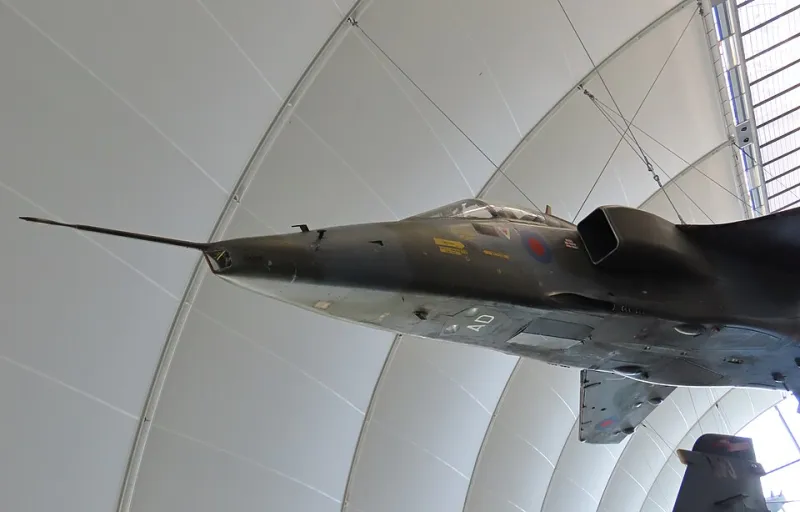
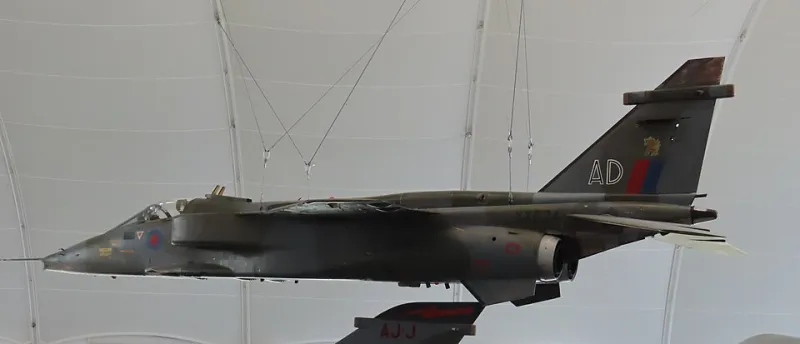
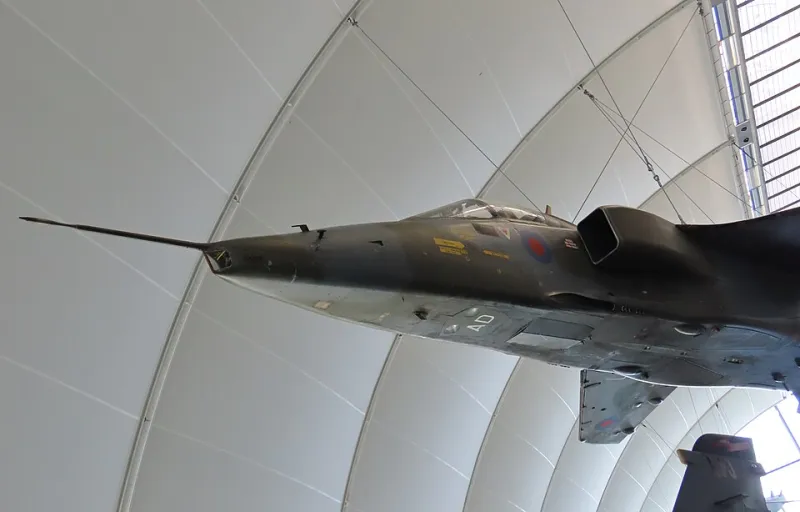
Operation Granby, the United Kingdom's contribution to the liberation of Kuwait, demanded rapid adaptation from an RAF still organised around European Central Region warfighting. The SEPECAT Jaguar was a child of that Cold War world: small, rugged and optimised for low-level attack from dispersed bases. Sending it to the Gulf was therefore not simply a matter of painting it sand-coloured. The deployment exposed the aircraft's practical strengths and its peacetime assumptions in equal measure.
From Norfolk to the Gulf
The Jaguar force's main homes were RAF Coltishall in Norfolk and RAF Lossiemouth in Moray. Both stations were geared to the rhythms of NATO's northern flank and to the demanding low-level training routes over the North Sea and Scottish Highlands. The Gulf requirement was different. It called for sustained operations from a austere forward base, in high temperatures, with sand rather than rain as the defining environmental hazard.
The detachment drew aircraft and people from across the force, including No. 6, No. 41 and No. 54 Squadrons, with engineering support shaped by the Jaguar OCU at Lossiemouth. The move was compressed into weeks rather than months. Aircraft were prepared, tested and dispatched while staffs worked through the unfamiliar business of desert camouflage, transit tanking and spares scaling. For a fleet accustomed to planning for a European war, the pace was bracing.
Sand-proofing a Low-Level Attacker
The Jaguar GR.1A was tough, but it had not been designed around Gulf conditions. Its Adour engines, avionics bays and canopy seals all had to cope with fine airborne sand. Groundcrews found that the aircraft's compact airframe left little room for error when access panels were opened in windy conditions. Intake screens, engine bay cleaning and more frequent compressor washes became routine. Heat soak on the ground was another consideration: avionics that performed reliably in a Norfolk winter could become temperamental after standing in Gulf sunlight.
The desert preparation was not a single modification package. It was a collection of practical measures: attention to seals, filtration, lubrication and cooling, together with revised servicing intervals. The Jaguar's robust construction helped, but the deployment underlined how much of an aircraft's availability depends on the ground organisation around it. The RAF learned again that sand is not merely an aesthetic problem; it is an abrasive, intrusive and persistent enemy of complex machinery.
Stores Fit: Beyond the Brochure
The Jaguar's external carriage was central to the Granby story. Overwing rails for AIM-9L Sidewinder air-to-air missiles gave the aircraft a self-defence capability that had not always been prominent in its European attack role. Underwing stations carried 1,200-litre drop tanks for range and endurance, while offensive fits included 1,000 lb bombs, BL755 cluster bombs and CRV-7 rocket pods. A centreline station could accommodate a reconnaissance pod or additional fuel, depending on the task.
The important point is that there was no single Gulf loadout. The Jaguar flew with mixed fits shaped by mission, range and available stores. A sortie might pair tanks with bombs, or rockets with a self-defence missile fit, while reconnaissance tasks demanded a different centreline arrangement. Armourers and store specialists had to work quickly and accurately in unfamiliar heat, often with the aircraft parked in the open. The physical effort of loading and unloading stores in such conditions is easily overlooked in later accounts.
Groundcrew and the Maintenance Burden
Granby placed heavy demands on the engineering trades. High sortie rates, heat and sand combined to increase wear on brakes, tyres and engines. Avionics faults could be intermittent and frustrating to trace, particularly when fine dust had found its way into connectors or cooling paths. The Jaguar's systems were generally accessible, but the environment punished every shortcut.
Groundcrew recollections from the period tend to emphasise improvisation and stamina rather than drama. There were long shifts, repeated engine washes, careful checks of intake and exhaust areas, and a constant battle to keep consumables flowing. The aircraft rewarded this attention with a respectable serviceability record, but it did so because the support organisation adapted. In that sense, Granby was as much a test of the RAF's engineering flexibility as of the Jaguar's design.
Squadron Experience and the Human Tempo
For aircrew, the Gulf offered a very different operational context from the Central Region. Low-level attack training had honed skills in terrain masking and high-speed delivery; desert operations placed greater emphasis on navigation, target identification and coordination with other coalition assets. The Jaguar's cockpit ergonomics and handling qualities remained familiar, which helped, but the environment was new. Heat, dust and the sheer scale of the theatre all changed the texture of a sortie.
Squadron life settled into a rhythm of planning, flying and debriefing, with engineering teams working around the clock to match. The deployment also reminded the force of the value of experienced senior non-commissioned officers and tradesmen who could diagnose a fault by ear or instinct as well as by manual. Their knowledge was as important as any modification.
What the Deployment Proved
Granby did not turn the Jaguar into a desert specialist. It did, however, demonstrate that a Cold War low-level attacker could be adapted to a new theatre when the pressure was on. The aircraft's small size, robust structure and straightforward external stores arrangements made it a practical participant, while its limitations in range and payload were managed through careful planning and tanking.
The lasting lesson was institutional. Rushed desert preparation, revised stores fits and intense maintenance effort showed how quickly an air force can reshape a familiar aircraft for an unfamiliar task, provided the ground organisation is flexible and well led. For the Jaguar force, Granby remains a useful case study in adaptation: not a transformation, but a hard, hot and hurried adjustment to a conflict that arrived without warning.