Signed Off in the Air: The Post-Maintenance Test Sortie and the RAF Jaguar
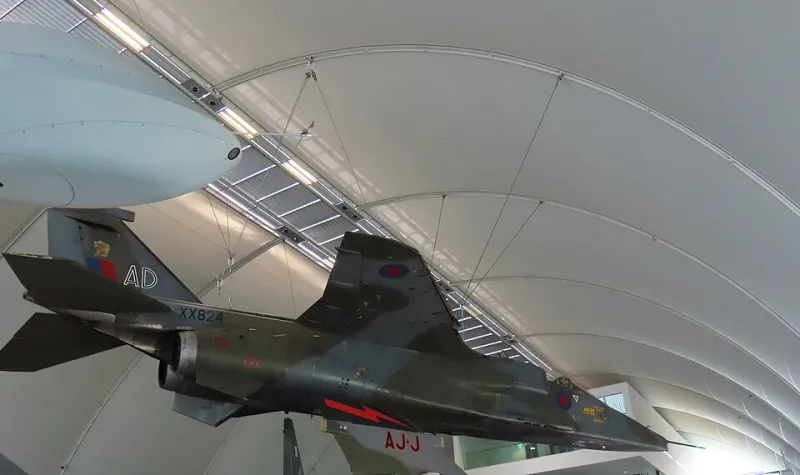
Photo: [[User:Ad Meskens|Ad Meskens You are free to use this picture for any purpose as long as you credit its author, Ad Meskens. Example: © Ad Meskens / Wikimedia Commons If you use this work outside of the Wikimedia projects, a message or a copy is
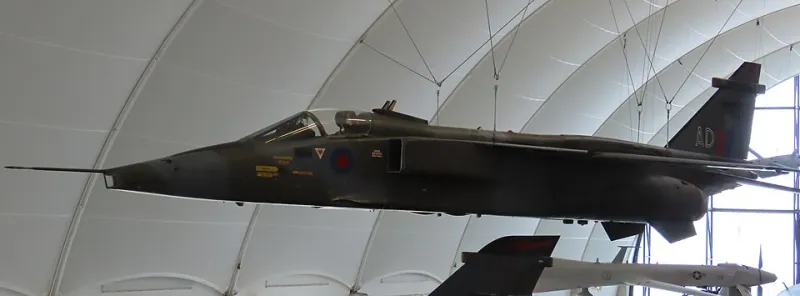
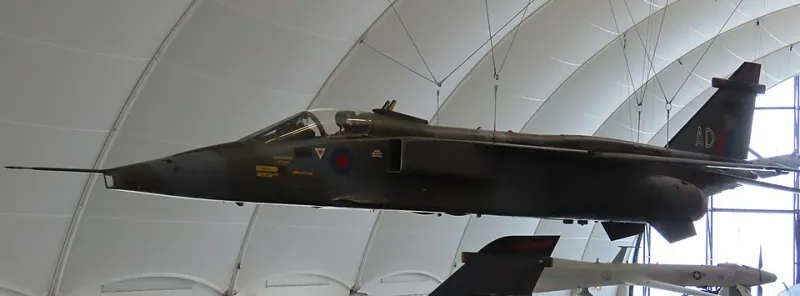
An RAF Jaguar emerging from deep maintenance was, for a short period, neither a squadron asset nor a purely ground-bound artefact. It was a collection of systems awaiting airborne confirmation. The post-maintenance air test was the bridge between those states: a sortie intended not to train crews or deliver weapons, but to establish whether an aircraft could be released back to duty with confidence. In the popular record, the Jaguar is remembered for low-level strike, reconnaissance and the hard routine of squadron life. The air test belongs to the same story, because without it the squadron aircraft never reached the line.
The Sortie After the Sortie
The air test followed work that had often touched the aircraft from nose to tail. Major servicing, structural inspection, hydraulic renewal, engine changes, avionics rectification or the correction of a persistent snag could all leave an airframe materially sound but operationally unproven. Ground checks could confirm much: pressures, voltages, continuity, rigging and the correct functioning of systems on jacks or during engine runs. They could not confirm how those systems behaved together in flight, under acceleration, vibration, thermal change and the normal workload of an aircrew.
The test sortie was therefore a deliberate act of verification. It was flown to a schedule, not to a mission. The aircraft was typically free of operational stores unless a specific clearance task required otherwise, and the profile was shaped around the checks that engineering authority and the pilot considered necessary. The aim was not to demonstrate the Jaguar's performance in the round, but to answer a narrower and more important question: was this specific airframe ready to be handed back?
A Profile Built from Checks
A useful air test began on the ground. The pilot needed to understand what had been disturbed, what had been replaced and what remained unresolved. The aircraft documentation, the snag list and the engineering brief were not background reading; they defined the sortie. A hydraulic component replacement might call for particular attention to system pressure and undercarriage operation. An engine change would demand a careful assessment of acceleration, idle behaviour and reheat. Avionics work might require the navigation and attack system to be exercised in a sequence that resembled operational use without pretending to be an operational sortie.
The airborne profile was usually compact but densely packed. After take-off, the pilot would climb clear of the circuit and begin working through the checks in a logical order. Handling would be assessed at representative speeds and altitudes. Primary flying controls, trim, flaps, airbrakes and undercarriage would be cycled as required. Engine response would be compared with expected figures. Electrical generation, pressurisation, pitot-static systems, radio and navigation equipment would be monitored. Where the Jaguar's mission systems had been disturbed, they would be brought to life and tested against known references.
This was not a casual acceptance flight. Each item had a purpose, and each observation had to be recorded. A short sortie could generate a long debrief, because the value of the air test lay less in the flying than in the evidence it produced.
The Pilot as Examiner
The pilot of a post-maintenance air test occupied an unusual position. They were not simply flying the aircraft; they were examining it. That required a mixture of currency, technical understanding and scepticism. A squadron pilot knew how a healthy Jaguar felt and sounded. A test pilot or nominated experienced crew member knew how to compare that impression with the schedule and when to stop pressing on.
The judgement was not purely mechanical. Some snags are clear-cut: a system that fails to respond, a pressure that falls outside limits, a vibration that should not be there. Others are marginal. A slight asymmetry, a slower than expected acceleration or an intermittent indication may be acceptable in one context and unacceptable in another. The air test pilot had to decide whether the aircraft was compliant, whether a minor defect could be deferred with proper authority, or whether the sortie should be curtailed and the aircraft returned to the engineering wing.
That responsibility carried weight precisely because the sortie was short. There was little time for a second opinion in the air. The pilot's observations, recorded accurately and reported without embellishment, became the basis for the next engineering decision.
Risk Compressed into a Short Sortie
An air test was often brief, but it was not low risk. The aircraft had just been disturbed by maintenance. Systems were being exercised, sometimes for the first time since reassembly. The crew were working through a demanding check list while also flying the aircraft. The sortie might include handling at the edges of the normal envelope, engine acceleration checks and configuration changes that placed workload on both pilot and airframe.
That concentration of activity explains why the air test was treated as a serious operation rather than an administrative formality. It required a planned profile, a clear brief, suitable weather and a disciplined approach to knock-it-off criteria. If something did not look or feel right, the correct response was not to complete the schedule for its own sake. The aircraft could be flown again; the evidence of an unsafe system could not be ignored.
The Unsung Gate to Serviceability
The air test has remained a quiet part of RAF Jaguar history because it produced no combat claims and few photographs for the enthusiast's album. Yet it was one of the points at which engineering and operations met. A successful test released an aircraft to the squadron. A failed test protected the squadron from an unserviceable machine. In both outcomes, the sortie did its job.
For the Jaguar force, readiness depended on many visible things: crews, weapons, bases and planning. It also depended on the less visible discipline of proving an aircraft after maintenance. The post-maintenance air test was a short flight with a long shadow. It was the moment when a repaired Jaguar stopped being a project on the ground and became, once again, an aircraft fit to fight.