Below the Bird Line: Jaguar Aircrew, Wildlife Hazard and the Discipline of Low-Level Flight
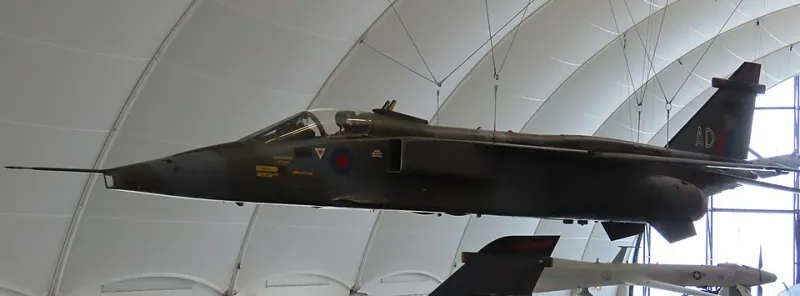
Photo: [[User:Ad Meskens|Ad Meskens You are free to use this picture for any purpose as long as you credit its author, Ad Meskens. Example: © Ad Meskens / Wikimedia Commons If you use this work outside of the Wikimedia projects, a message or a copy is
A hazard written into the mission
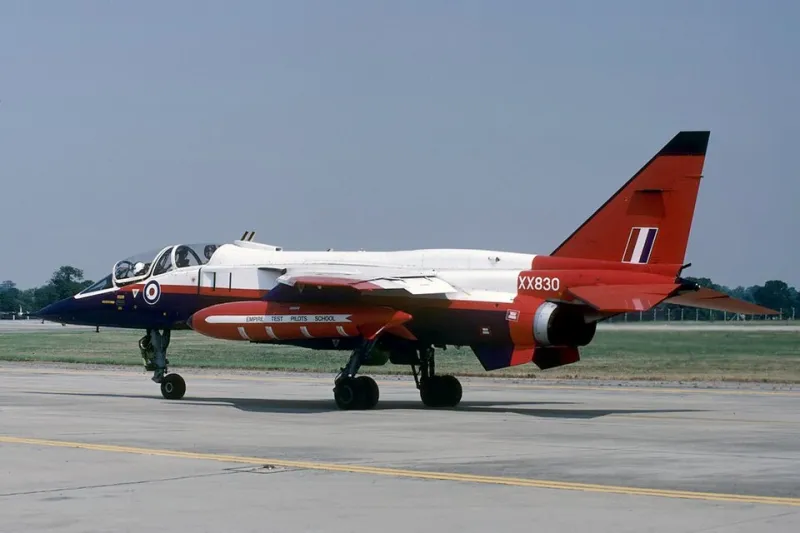
The SEPECAT Jaguar was conceived for a very particular kind of flying: fast, low and close to the terrain. That profile made it effective as a strike aircraft, but it also placed the airframe and its crew in the same envelope as birds. Bird strike is often treated as an unlucky accident. In RAF Jaguar service it was better understood as a structural feature of the low-level contract — a risk that had to be designed around, briefed against and reported honestly.
The Jaguar’s side-mounted intakes and broad canopy gave crews a good field of view, but they also presented large forward-facing surfaces to anything in the flight path. At 500 feet and high subsonic speed, the available reaction time was minimal. A bird seen late was not a problem to be avoided by a gentle turn; it was an event already arriving. The engineering question was therefore not simply how to prevent bird strike, but how to make the aircraft and its systems tolerant of it, and how to make the operational system alert to where the risk was greatest.
Design, transparency and the intake problem
Fast-jet airframes are not built to be bird-proof. They are built to survive defined encounters without catastrophic loss of control, and the Jaguar was no exception. The windscreen and canopy had to balance optical quality, weight and structural integrity. A strike on the transparency could obscure vision, crack a panel or, in the worst case, penetrate the cockpit. Crews trained for the possibility, but the first line of defence was the aircraft’s ability to keep flying after damage.
Engine ingestion was the other half of the problem. The Jaguar’s Adour engines were robust and forgiving in many respects, but a bird taken into an intake at low level could cause compressor damage, surge or loss of power at precisely the moment when height was scarce. The side intakes were efficient for the aircraft’s design, yet they demanded respect in an environment where flocks gather near airfields, coastlines and low ground. Engineers inspected intake lips and ducting for evidence of strikes, and a single event could generate a disproportionate amount of work behind the panels.
The result was a design philosophy of managed vulnerability rather than immunity. The Jaguar could absorb some strikes and continue; others would end the sortie. The difference lay in where the bird hit, how much mass was ingested, and how quickly the crew recognised the change in engine or airframe behaviour.
Route planning as risk management
Low-level flying in the RAF was never a matter of simply following a line on a map. Routes were planned through a system of low-flying areas, with attention to built-up areas, known bird concentrations and seasonal patterns. The Jaguar force operated in the UK and in Germany, and both environments demanded local knowledge. Coastal ranges, reservoir edges, farmland and airfield approach paths all carried different levels of wildlife activity.
Aircrew briefings included bird hazard warnings alongside the usual weather, threat and terrain information. The detail mattered. A route that was acceptable in midwinter might be less so in spring, when nesting and migration changed the picture. Flying at 500 feet reduced the time available to see and react, but it also placed the aircraft below many high-flying species. The risk was not uniform. It clustered where birds fed, roosted or moved between those places.
This was the everyday calculation of the low-level crew: not a single decision, but a continuous appraisal of speed, height, visibility and the likelihood of encountering wildlife. The Jaguar’s terrain-following mission made that appraisal unavoidable. Crews who flew the aircraft well learned to read the landscape for bird activity as well as for obstacles.
Reporting, engineering and the paper trail
Bird strikes were reported through the RAF’s occurrence reporting system, and the resulting records did more than satisfy administrative process. They built a picture of where and when strikes occurred, which parts of the airframe were affected and how the aircraft behaved afterwards. Engineering authorities could then assess whether a particular intake, transparency or engine response warranted closer attention.
For ground crews, the evidence was often physical: feathers, blood and impact marks around the intake, damage to a windscreen or dents on a leading edge. The Jaguar’s maintenance economy depended on accurate diagnosis, and bird strike was one of the many ways in which the aircraft told its engineers what it had been through. A strike that seemed minor in the cockpit could require borescope inspection, panel removal and careful checks before the aircraft flew again.
The reporting culture also connected the squadron to the wider station. Airfield bird hazard management, grass cutting, drainage and waste control all influenced the local bird population. The Jaguar’s low-level role meant that the risk extended well beyond the airfield boundary, but the station remained the focal point for advice and action.
What the Jaguar years left behind
Later fast-jet practice inherited more than a set of procedures. It inherited an attitude: bird strike is a foreseeable hazard of low-level operations, not an aberration. Modern aircraft may carry different sensors and more capable engines, but the fundamentals remain recognisable to anyone who flew or maintained the Jaguar. Route planning still weighs wildlife activity. Aircrew still brief the risk. Engineers still read the evidence on the intake and the transparency.
The Jaguar’s contribution was to demonstrate, across years of routine low-level training and operational deployment, that the hazard could be managed without pretending it did not exist. The aircraft was never bird-proof, and no one who flew it thought otherwise. The achievement lay in the discipline that surrounded it: the planning, the reporting, the engineering follow-up and the aircrew judgement that turned a permanent risk into a controlled one.
At 500 feet, the bird line was not a metaphor. It was the height band in which the Jaguar did its work, and the crews who flew it learned to share that band with everything else in the air.