The Contract with the Worst Case: Ejection Seats and Confidence in RAF Jaguar Crews
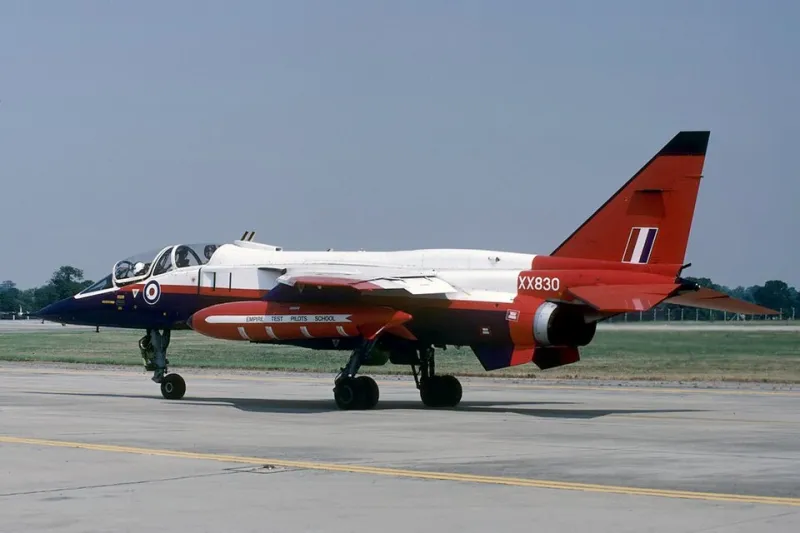
Photo: Mike Freer - Touchdown-aviation, GFDL 1.2, via Wikimedia Commons
A seat with a job beyond comfort
In photographs of the SEPECAT Jaguar cockpit, the ejection seat often reads as part of the furniture: a dark structure behind the control column, framed by the canopy rails. In service, it was never merely furniture. The Martin-Baker Mk.9-series seat fitted to RAF Jaguars was a stored-energy device, a maintenance item and a daily ritual all at once. It sat at the centre of the crew's relationship with risk, and it shaped the way groundcrews, instructors and squadron commanders talked about the worst case.
The Jaguar was flown low and fast by design. RAF Germany squadrons trained to operate from forward airfields, often in poor weather and at heights where a successful ejection left little margin for error. That operational context gave the seat a significance beyond its specification. Crews did not need to discuss it constantly, but they needed to trust it absolutely. The seat was the physical expression of a simple contract: if the aircraft could no longer be flown, the crew had a route out.
Installation, access and the maintenance burden
The Jaguar's seat was integrated into a compact cockpit with limited room for error. Harness routing, leg restraint lines, seat adjustment and personal equipment all had to work together. Groundcrew access was not generous, and the seat demanded respect precisely because it was designed to move violently in an emergency. Routine work around it was governed by safety pins, inspection routines and the discipline of keeping firing mechanisms isolated until the correct moment.
Archive maintenance practice reflects a familiar RAF pattern. The seat was treated as a life-support system rather than a simple piece of furniture. Cartridge and initiation components, harness attachments, parachute pack connections, restraint systems and the seat's structural mounting all came under scrutiny. Groundcrews remember the paperwork as much as the hardware: the checks, the signatures, the confirmation that the seat was safe for flight and, equally important, safe for the people working around it.
For aircrew, the pre-flight encounter with the seat was brief but highly formalised. Safety pins were checked and stowed, harnesses were tightened and locked, leg restraints were connected and personal equipment was confirmed. The cockpit preparation was not a moment for improvisation. In a single-seat Jaguar the pilot carried the whole sequence alone; in the two-seat T.2 the crew had to brief how the aircraft would be abandoned and how the seats would be initiated. The detail mattered because the emergency itself would be short, noisy and unforgiving.
Drills, calls and the pin ritual
Squadron culture around the Jaguar seat was built on repetition. Aircrew rehearsed ejection drills in ground training, cockpit mock-ups and annual egress sessions. They learned the body position, the sequence of canopy and seat initiation, the handling of personal equipment and the decisions that followed a successful escape. The drills were not intended to make ejection routine. They were intended to make the first seconds of an emergency less novel.
The language around the aircraft reflected that discipline. The safety pin became a small ceremony of its own. Crews and groundcrew confirmed that pins were in place before flight and removed at the correct stage, and the call was part of the larger conversation between cockpit and flight line. To an outsider it can sound like procedure for its own sake. To a Jaguar squadron it was a check against a very specific kind of mistake, and it reinforced the idea that the seat was live equipment even when the aircraft was on the ground.
There was also black humour. RAF crews have long used dry remarks to manage the presence of danger, and the Jaguar force was no exception. The seat was sometimes discussed in the language of insurance, sometimes as a last resort, sometimes with the studied casualness of people who did not want to dwell on it. That humour should not be mistaken for indifference. It was a way of keeping the subject close enough to remain professional.
Confidence, not certainty
Escape systems shape confidence in ways that are difficult to measure. A crew that trusts the seat can concentrate on the mission; a crew that does not will be distracted by the equipment behind it. The Martin-Baker installation gave the Jaguar force a credible answer to the worst case, but it could not remove the risk. Ejection is a violent, injury-prone event, and low-level operations reduce the time available for the sequence to work. The seat was a safeguard, not a guarantee.
That distinction is important when assessing the Jaguar's safety record. Archive accounts and squadron recollections include successful ejections that saved lives, as well as accidents in which the outcome was different. The seat belongs in that history as one factor among many: aircraft handling, weather, training, maintenance and the nature of the impact all mattered. To say that a crew survived because of the seat is accurate but incomplete. To say that the seat made the risk acceptable is closer to the truth of how squadrons operated.
The wider RAF approach to aircrew survival reinforced the same lesson. Egress training, equipment checks and seat maintenance were part of a system, not isolated rituals. The Jaguar's seat was a British-built answer to a British operational problem, and its presence in the cockpit connected the aircraft to a long Martin-Baker lineage. For the archive, that connection is worth recording not only as engineering history but as evidence of how crews negotiated danger.
What the archive should preserve
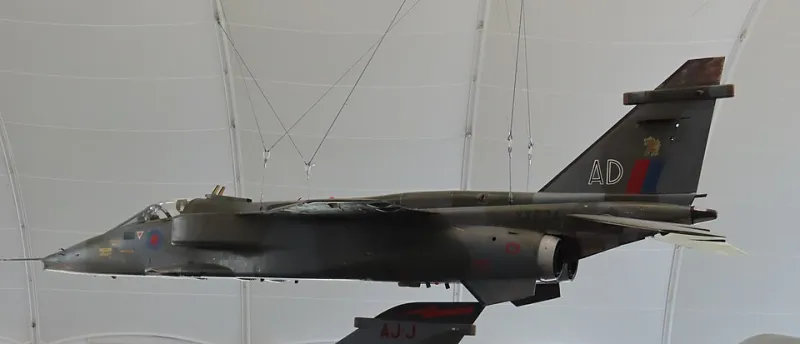
Preserved Jaguars in museums and private collections usually display deactivated seats, and that is as it should be. The safety pins, the warning markings and the cockpit access panels still tell a story, but they no longer carry the same meaning as they did on a live squadron. Photographs of crews strapping in, groundcrew leaning into the cockpit and instructors running egress drills are therefore valuable evidence. They show the seat as part of a working routine rather than a static exhibit.
The contract with the worst case was never written down in a squadron diary. It lived in the pin check, the harness tug, the rehearsal of a body position and the quiet confidence that the seat would do its job if called upon. In RAF Jaguar service, that contract was part of the aircraft's character. It deserves a place in the technical history alongside engines, avionics and stores, because it shaped not only what the Jaguar could do but how its crews were willing to do it.