Bases Before Bombs: Infrastructure, Dispersal and the Jaguar Force's European War
The Mission Beneath the Mission
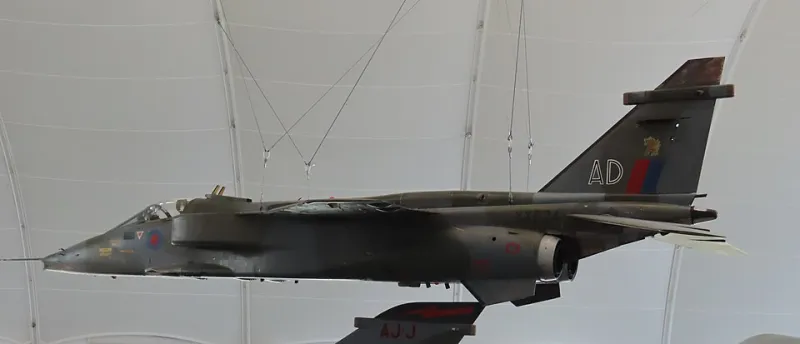
Discussions of the SEPECAT Jaguar in RAF service tend to begin with the aircraft: its low-level ride, its stores carriage, its navigation and attack systems. That is understandable, but incomplete. For the Jaguar force in Germany, the operational plan was never simply a matter of crews and aeroplanes. It was a plan for airfields — for shelters, runways, repair parties, fuel lines and the unglamorous machinery of survival. The aircraft's low-level mission depended on a base system designed to absorb punishment and keep generating sorties. In that sense, the Jaguar's European war was as much a contest of concrete and organisation as of airmanship.
Shelters as a System, Not a Scrap of Concrete
The hardened aircraft shelter is often treated as a piece of background architecture. In RAF Germany it was better understood as part of a system. A HAS protected an aircraft from blast and fragmentation, but it also shaped how groundcrews worked: how weapons were loaded, how engines were run, how faults were diagnosed and how quickly an aircraft could be turned around. The shelter was a workshop, a garage and a bunker at once. Its limitations mattered as much as its strengths. Doors, ventilation, lighting and space all imposed constraints on peacetime habits that had to be adapted for war.
RAF Brüggen and RAF Laarbruch, the principal Jaguar bases in Germany, are the obvious reference points, but the force's thinking extended beyond them. Dispersal to other airfields, including civil or less familiar sites, was part of the planning vocabulary. The aim was not merely to survive a first strike but to preserve the ability to operate from more than one place. That required aircraft that could be supported away from their home base, and groundcrews trained to improvise. The Jaguar's ruggedness was useful, but it was the support organisation that made dispersal credible.
Runway Denial and the Arithmetic of Repair
A runway is a fragile thing. It is also a repairable one. The RAF's runway denial and repair doctrine recognised that craters could be filled, surfaces restored and operations resumed, provided the right material and trained personnel were available. For the Jaguar force, the question was never whether a runway might be cut; it was how quickly a usable strip could be restored and how many aircraft could be launched in the interval.
This arithmetic shaped training and equipment. Repair parties, crater-filling materials and rapid surface treatment were part of the airfield plan. So too was the recognition that a damaged runway might be used at reduced length. That brought arrestor gear into the picture. Arrestor systems offered a way to recover an aircraft that could not be guaranteed a full-length landing run, and they formed part of the broader effort to keep an airfield usable under attack. The details varied by base and by era, but the principle was consistent: the runway was a system to be managed, not a fixed asset to be abandoned.
The Short-Field Problem
Short-field operations were not a peacetime party trick. They were a wartime necessity. If a main runway was damaged, or if operations were dispersed to a site with less generous dimensions, the Jaguar might have to operate from a shorter strip than normal. That placed a premium on aircrew technique, on aircraft braking and on ground equipment. It also underlined the value of arrestor gear as a backstop rather than a routine aid.
The Jaguar was not a STOL aircraft in the mould of the Harrier, and it is important not to overstate its short-field capability. But the force planned for degraded conditions, and that planning included the possibility of reduced runway lengths, barrier engagement and careful energy management. In a European war, the question was not whether the aircraft could operate from a perfect base, but whether it could operate from an imperfect one.
Mobile Support and the Improvised Squadron
Perhaps the most under-examined element of the Jaguar force's war plan is the mobile support organisation. A squadron at war was not simply a collection of aircraft and crews; it was a package of trades, vehicles, tools and spares. Dispersal demanded that this package be movable. Groundcrews might have to work from temporary facilities, with limited power, limited lighting and limited shelter. The ability to improvise was not an alternative to training; it was the product of it.
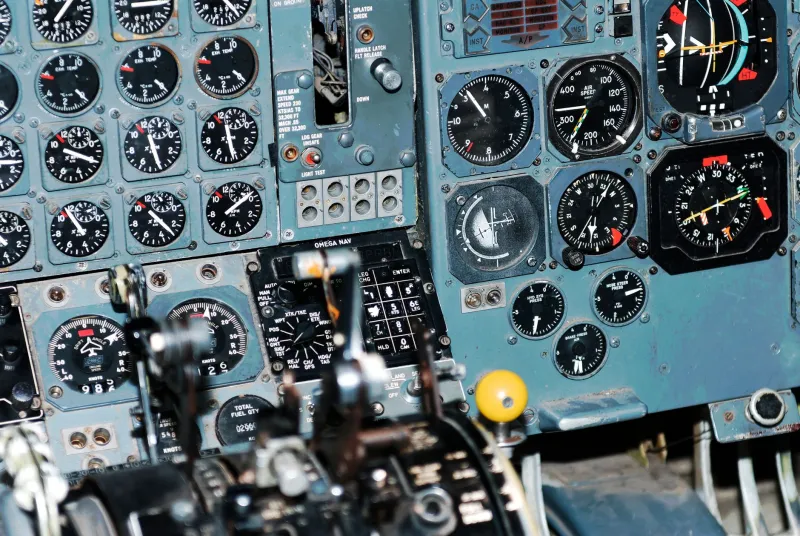
This is where the Jaguar's reputation for demanding maintenance meets the reality of wartime support. The aircraft required skilled technicians, but the organisation around it required flexibility. Mobile support teams, forward arming and refuelling arrangements, and the practical business of keeping aircraft serviceable away from home all formed part of the plan. The airframe was the sharp end, but the ground organisation was the shaft.
What the Concrete Still Says
In 2026, the physical evidence of this planning is fragmentary but instructive. Surviving hardened shelters at former RAF Germany bases, museum exhibits, photographs and personal accounts all offer clues. The concrete itself is mute, but its dimensions, door arrangements and siting reveal assumptions about blast, access and aircraft handling. Airfield archaeology — the study of surviving taxiways, dispersals and shelter layouts — can add detail that documents alone do not capture.
For the enthusiast and the historian, the lesson is that the Jaguar story is not confined to the airframe. The bases, the shelters and the groundcrews' working conditions are part of the same history. The Jaguar force planned to survive a European war by dispersing, repairing and improvising. That plan rested on infrastructure as much as on engines, and on the people who worked the concrete as much as on the crews who flew from it.