The Ledger in the Airframe: Fatigue Accounting and the RAF Jaguar's Service Life

Every RAF Jaguar carried two records of its life. One was the Form 700, the servicing and defect log that told crews and engineers whether the aircraft was fit to fly. The other was less readable from the cockpit: the fatigue meter, a small counting instrument that recorded how the airframe had been loaded, sortie by sortie. The first record decided whether the aircraft flew today. The second helped decide whether the fleet could fly at all.
The Meter Is the Record
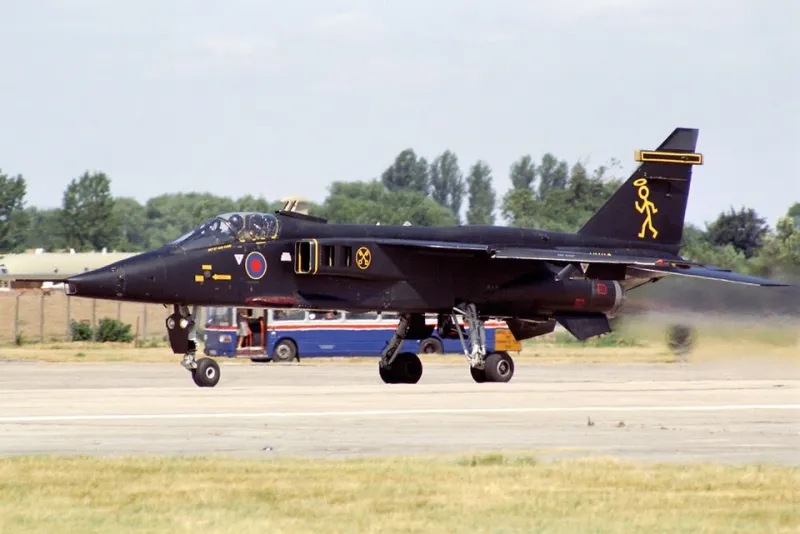
The Jaguar was designed in an era when safe-life principles still dominated strike aircraft structural thinking. Its airframe was cleared for a defined life, but that life was not simply a number of flying hours. It was an allowance measured against a load spectrum: the mix of gusts, manoeuvres, stores carriage and landing loads that the structure actually experienced. A Jaguar tearing across the German countryside at low level, carrying tanks and bombs, was not accumulating fatigue in the same way as one flying a gentle transit sortie. The fatigue meter existed to make that difference visible.
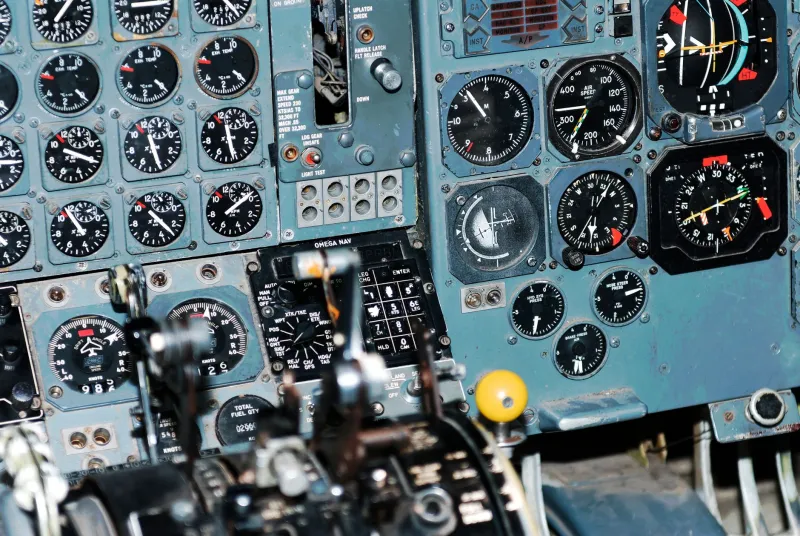
Engineers who worked the Jaguar line remember the meter download as one of the least glamorous but most consequential tasks of the day. The instrument counted accelerations above set thresholds, giving a crude but workable picture of how hard the airframe had been worked. Those readings were transcribed, checked and passed into the engineering system. In an age before routine onboard structural health monitoring, this was the RAF's practical answer to a difficult question: how much of the aircraft had already been used up?
Reading a Sortie
The answer was rarely a single figure. A low-level sortie in the UK or Germany produced a different fatigue signature from a training circuit at Coltishall, and a heavy stores fit changed the loads transmitted through the wing and fuselage. Gusts mattered. So did the pilot's style, the weather and the mission profile. The fatigue meter did not capture every detail, but it captured enough to prevent hours from being treated as a simple currency.
This is why Jaguar fatigue accounting was never just a clerk's exercise. The readings fed into decisions about inspections, component changes and the rate at which individual airframes approached their structural limits. A squadron could fly the same nominal hours as another and still present a different fatigue picture. Fleet planning had to recognise that aircraft were not interchangeable ledgers. Some had spent their hours in harsher corners of the envelope than others.
Depot Arithmetic
At depot level, the meter data met the inspection schedule. Major servicing was where the airframe was opened, examined and, where necessary, repaired. The major servicing line, long associated with St Athan, was not simply a deep maintenance visit; it was the point at which the accumulated evidence of hours and loads was tested against the physical condition of the structure. Non-destructive inspection, crack detection and detailed examination of high-load areas turned the fatigue record into a maintenance judgement.
Structural repairs were part of the rhythm of Jaguar life. Local reinforcement, replacement of members and attention to areas prone to cracking were not signs of failure but of a mature fleet being managed. The RAF had to balance the cost of repair against the value of the airframe and the hours remaining in its allowance. A repair that preserved an aircraft for several more years might be worthwhile; one that consumed scarce depot capacity for a marginal gain might not.
Repairs, Modifications and the Life-Extension Question
Life extension was never a single decision. It was a series of trades between structural inspection findings, modification programmes, spares availability and the operational demand of the moment. The Jaguar force was small enough that individual airframes mattered, but large enough that fleet-wide trends could not be ignored. A recurring crack or a new inspection finding could change the planning assumptions for the whole fleet.
Modifications could improve the situation, but they also added complexity. Every change had to be incorporated without disrupting squadron output or depot schedules. The engineering authority had to ask whether a modification was worth the hours it would consume, and whether the fleet could afford the aircraft being out of service while it was done. These were not abstract questions. They determined whether a squadron could meet its commitments or whether another unit had to absorb the task.
Fleet Planning and the Endgame
By the 2000s, the Jaguar force was shrinking, and fatigue life remaining became part of the language of drawdown. Airframes were assessed not only for their condition but for their value as sources of spares. The retirement of the type in 2007 was driven by a combination of defence decisions, fleet economics and the inexorable arithmetic of structural life. Fatigue was not the only factor, but it was a persistent one. It set limits that no amount of squadron enthusiasm could ignore.
In oral-history accounts, the phrase that recurs is not drama but routine: reading the meter, raising the paperwork, finding the crack, deciding the repair. The quiet fight to keep the Jaguar flying was fought in workshops and planning offices as much as on the flight line. It was a fight about hours in the metal, and about the people who understood that every hour had to be accounted for.
What the Hours Still Tell Us
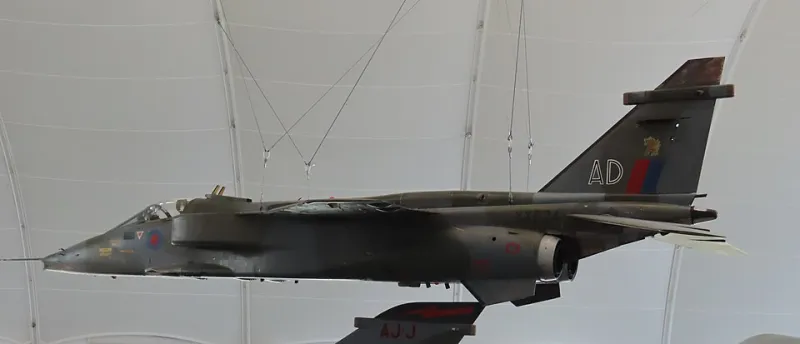
In 2026, a preserved Jaguar is a static object, but its fatigue meter and its records still tell a story about service life. They remind us that an aircraft is not simply a machine with a logbook. It is a structure with a history of loads, a fleet with a balance sheet of hours, and a maintenance organisation with the difficult task of making both add up. The Jaguar's reputation rests on speed, noise and low-level punch. Its longevity rested on something quieter: the ledger in the airframe.