The Nose as a Sensor: Rethinking the Jaguar GR1A's Reconnaissance Role
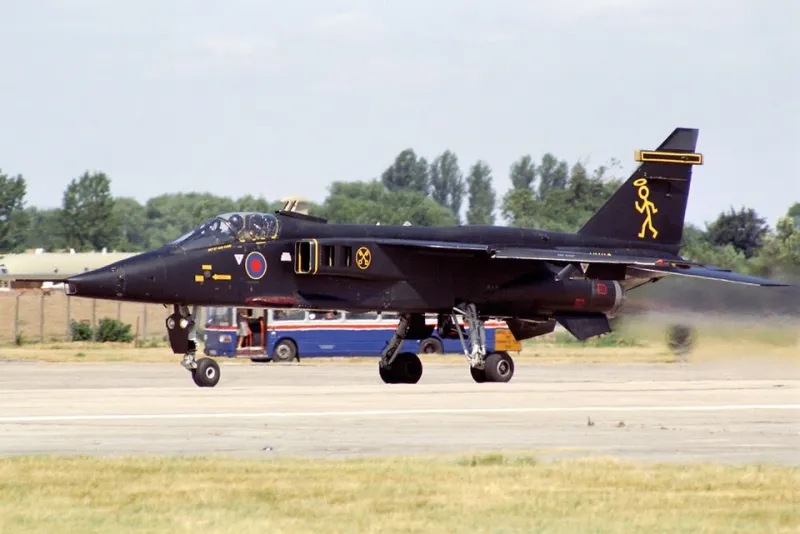
Photo: Anthony Noble, GFDL 1.2, via Wikimedia Commons
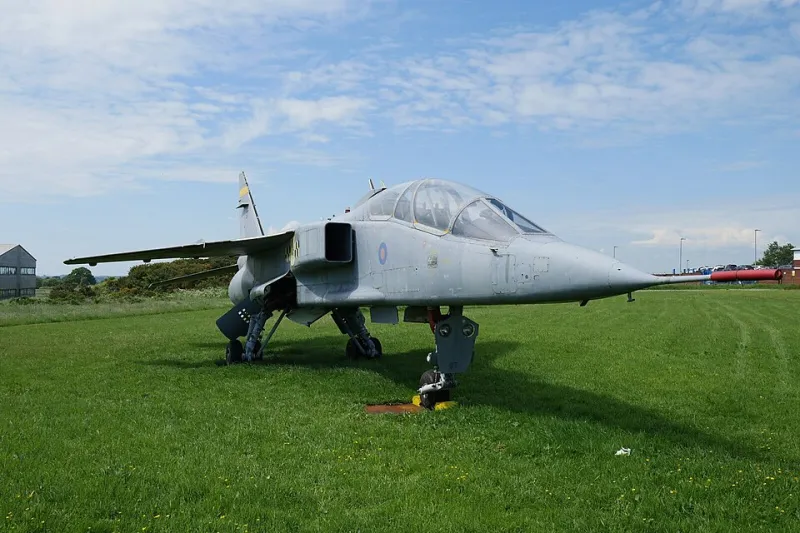
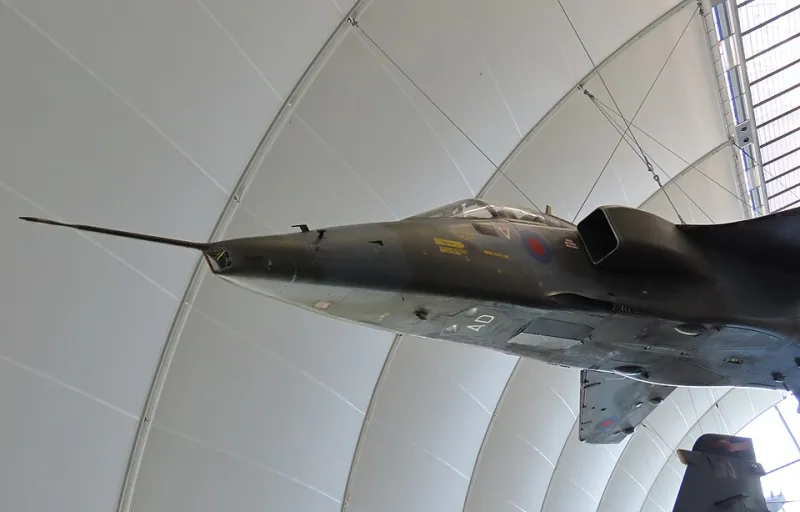
The reconnaissance Jaguar is usually identified by its nose. That is understandable: the GR1A's forward fuselage gave the aircraft a profile distinct from the strike GR1, and photographs of the type often linger on the camera windows and access panels that marked it out on the flight line. Yet the nose was only the most visible part of a broader design argument. For the RAF, reconnaissance was not simply a matter of fitting cameras to a fast jet. It was a question of how to collect imagery at low level, in bad weather, against a moving tactical picture, and then get the product to the people who needed it while it still mattered.
From strike platform to tactical sensor
The Jaguar had been conceived as a close-support and strike aircraft, with a emphasis on low-level penetration, weapon delivery and survivability. The GR1A conversion programme reflected a different emphasis. It retained the Jaguar's speed and handling, but added a reconnaissance capability that required the forward fuselage to accommodate sensor pallets and the associated access, cooling and control arrangements. The result was an aircraft that looked externally similar to its strike siblings until the nose was examined closely.
The important point is that the GR1A was not a makeshift conversion in which a camera was pointed through a convenient aperture. The reconnaissance installation was palletised, which allowed different sensor combinations to be fitted for different tasks. That flexibility mattered. A sortie tasked with route reconnaissance might require a different palette from one examining a bridge complex, a rail junction or a concentration of vehicles. The nose became a bay for mission-specific equipment rather than a fixed camera housing.
What the nose was for
In RAF service, the reconnaissance Jaguar's sensors were intended to answer tactical questions: what is here, how many, where are they moving, and what has changed since the last look? The nose-mounted cameras provided detailed imagery of the ground beneath and ahead of the aircraft, while other palletised sensors could add breadth or work in conditions less suited to optical photography. The precise fit varied, but the principle was consistent: the aircraft was a collection platform, and the nose was its primary window on the battlefield.
This had consequences for the way the aircraft was flown. A strike pilot is trained to deliver a weapon to a point; a reconnaissance pilot is trained to place the aircraft so that a sensor can see the right ground at the right angle and scale. That requires careful timing, heading and height control, often while the aircraft is still operating in the low-level environment for which the Jaguar was designed. The crew workload was therefore different, even if the cockpit looked familiar.
Planning, flying and interpreting
A reconnaissance sortie began long before engine start. The tasking had to be translated into a flight profile: run-in headings, sensor settings, turning points and the timing of each pass. The aim was to collect usable coverage, not merely to overfly a target. Weather, light and threat disposition all shaped the plan. A low cloud base might favour one sensor; a fast-moving armoured column might demand a different run.
Once airborne, the pilot had to fly the aircraft as a sensor platform. The Jaguar's low-level performance gave it the ability to reach a target area quickly and to present a small radar and visual signature, but the recce task demanded discipline. A poorly positioned pass could produce imagery that was technically exposed but tactically useless. The best recce crews understood that the value of the sortie lay in the ground covered and the clarity of the record, not in the drama of the flight.
Interpretation was the next stage. Film and other sensor products had to be processed, examined and turned into reports. In the pre-digital era this was a time-critical process, and the reconnaissance organisation was built around it. Imagery analysts looked for vehicles, track patterns, construction activity, aircraft and damage. Their conclusions were fed back to commanders who might be deciding where to send reinforcements, where to aim fire, or whether a route was clear. The Jaguar's nose was therefore connected to a chain of people and procedures far larger than the aircraft itself.
A different kind of Jaguar
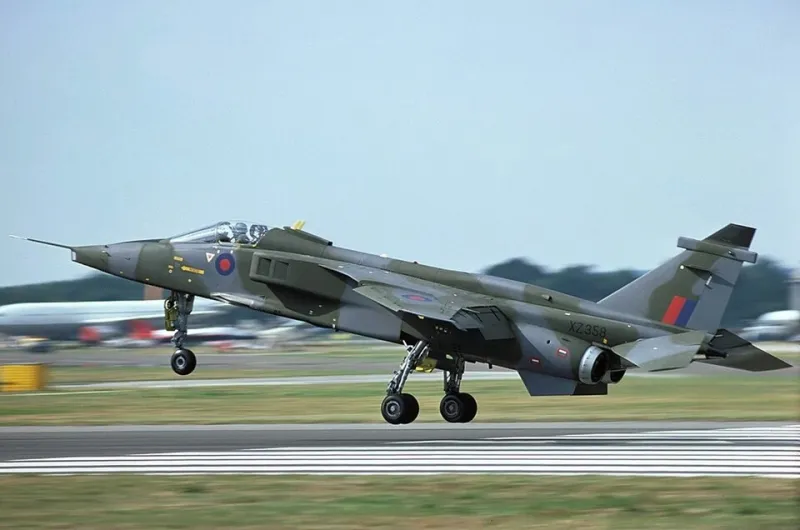
Compared with the strike GR1, the GR1A represented a subtle shift in identity. The airframe still had the Jaguar's rugged landing gear, its twin-engine safety and its low-level handling, but the mission emphasis changed. The reconnaissance variant was less about the weight of a weapon load and more about the quality of the information it brought back. That did not make it less warlike. Tactical reconnaissance has always been a combat role, and the recce Jaguar crews operated in the same dangerous airspace as their strike colleagues.
It did, however, make the aircraft a specialist tool. Squadrons tasked with reconnaissance, including those associated with the type at Coltishall, developed their own procedures and expertise. The nose became a badge of that specialism, but also a reminder that reconnaissance is a system: aircraft, sensors, planners, analysts and communicators. Remove any part of that system and the imagery loses value.
The nose in hindsight
The GR1A's reconnaissance nose is now one of the most distinctive features of the British Jaguar story. Preserved airframes and nose sections allow enthusiasts to examine the windows, panels and pallet arrangements at close range, but the hardware tells only part of the story. The real achievement was the integration of a tactical sensor capability into a demanding low-level aircraft, and the creation of a workflow that turned passes over ground into intelligence.
For the modern reader, the GR1A is a useful corrective to the idea that reconnaissance is simply a camera in an aircraft. It is a mission design problem, and the Jaguar's answer was a nose that could be reconfigured, flown precisely and connected to an interpretation chain. That is why the recce Jaguar deserves to be studied not only as a variant, but as a case study in how the RAF turned a strike airframe into a tactical eye.