The Engine That Set the Tempo: Adour Power and the RAF Jaguar
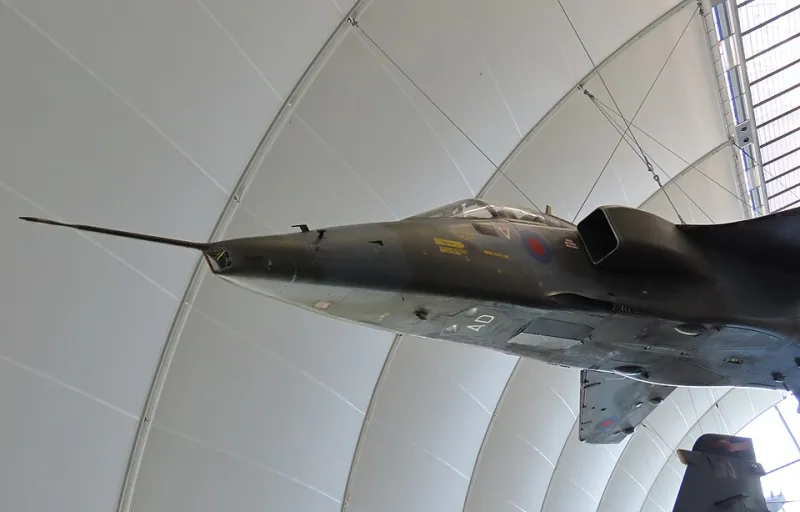
Photo: [[User:Ad Meskens|Ad Meskens You are free to use this picture for any purpose as long as you credit its author, Ad Meskens. Example: © Ad Meskens / Wikimedia Commons If you use this work outside of the Wikimedia projects, a message or a copy is
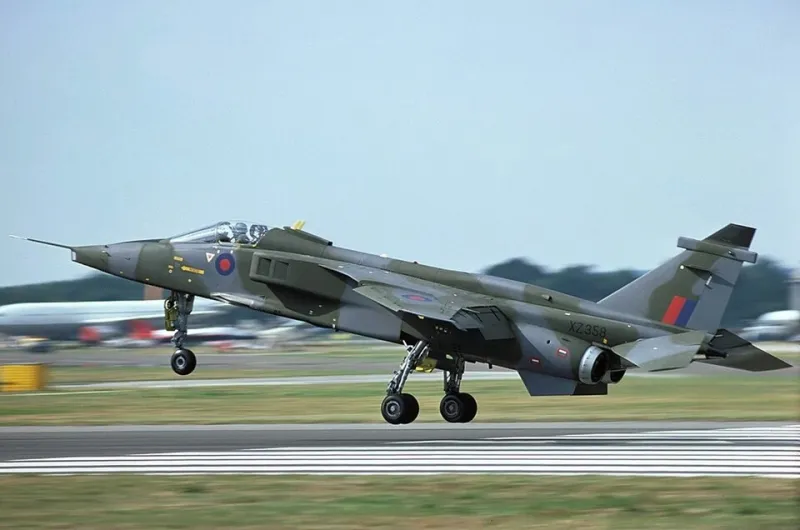
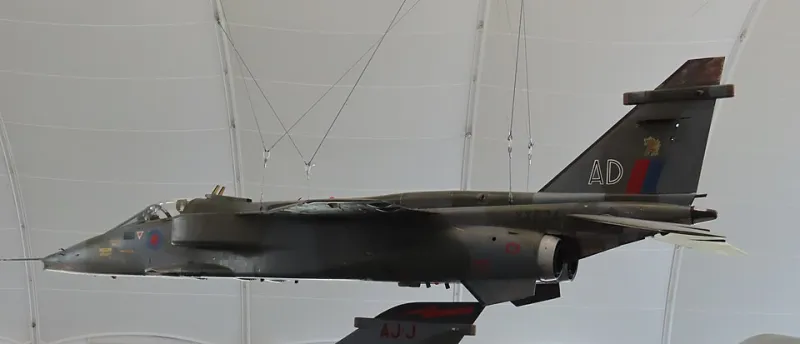
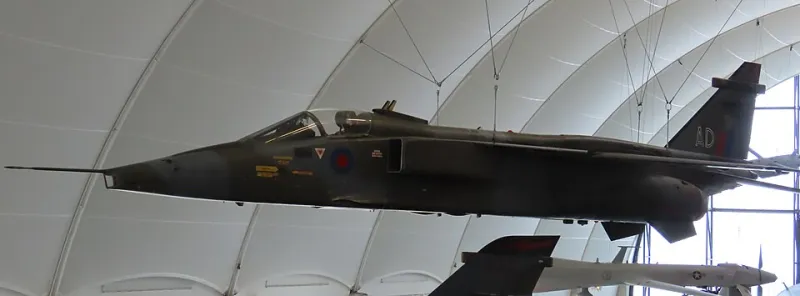
The SEPECAT Jaguar is usually discussed through its airframe, its avionics or its place in the RAF's cold-war order of battle. The engine is often left as a line in a specification table: two Rolls-Royce/Turboméca Adour afterburning turbofans. That shorthand understates the Adour's influence. In service, the engine set the tempo of the aircraft. It governed acceleration, fuel states, take-off performance and the daily rhythm of the flight line. To understand why the Jaguar felt and behaved as it did, the Adour deserves to be treated as more than a powerplant footnote.
An Anglo-French Powerplant for a Joint Aircraft
The Adour was a product of the same Anglo-French industrial settlement that produced the Jaguar itself. Rolls-Royce and Turboméca collaborated on a compact two-spool turbofan with a low bypass ratio and an integrated reheat system. The design was not intended to be a record-breaker. It was intended to be robust, maintainable and suitable for a small strike aircraft operating from austere bases. The engine first ran in the late 1960s and was subsequently selected for the Jaguar and, in developed form, for the Hawk trainer.
For the RAF, the Adour was adopted in successive standards, with the Mk 102 and later marks associated with the Jaguar force. The precise mark fitted to a given airframe is a matter for the record cards, but the broad character remained consistent. The Adour was a modest-thrust engine by the standards of larger strike types. Its value lay in compactness, relatively simple construction and a reheat system that could be brought in when the mission demanded it. It was an engine of practical compromises rather than spectacular headline figures.
Reheat Without Romance
Reheat is often described in dramatic terms, but in the Jaguar it was a working tool rather than a romance. The Adour's afterburner provided a useful increase in thrust for take-off, acceleration and short-duration combat or escape manoeuvres. It did not turn the Jaguar into a sustained supersonic performer. Instead, it gave the aircraft a burst of energy when the tactical situation or the runway length required it.
The cost was fuel. Lighting reheat sharply increased consumption, and crews treated it as a finite resource. In low-level training over the UK, the engine's dry thrust was often sufficient for cruise and routine handling. Reheat was selected with purpose: for a take-off with a heavy store load, for a rapid acceleration in a tactical scenario, or for a short period of extra performance. The Adour's reheat behaviour therefore encouraged anticipation rather than casual throttle movement. It rewarded pilots who planned their energy state and penalised those who treated the afterburner as a constant option.
Fuel Burn and the Arithmetic of Range
The Jaguar was not a long-range bomber, and the Adour's fuel appetite in reheat reinforced that reality. In dry cruise, the engine could be operated with reasonable economy for its generation, but the aircraft's low-level role and external store load always made fuel planning a central discipline. Range was not simply a function of tank capacity; it was a function of throttle handling, altitude, speed and the careful use of reheat.
Squadron planning reflected this. External tanks, tanker support where available and precise mission profiles all mattered. The engine's characteristics meant that a Jaguar crew thought in terms of fuel states and decision points. A low-level sortie was not flown at a single power setting from brake release to recovery. It was a sequence of planned transitions, with reheat reserved for the phases where its thrust was worth its cost. In that sense, the Adour shaped tactics as surely as any avionics fit.
Maintenance and the Flight Line
The Adour's practical character extended to the ground. Its modular construction and relatively accessible installation suited the Jaguar's squadron environment. Engine removal and inspection were established routines, and the flight line depended on engine trades working closely with airframe and systems personnel. The engine's reheat section and turbine conditions demanded careful inspection, as did oil and vibration trends. These were not unusual burdens for a 1960s-generation turbofan, but they formed the daily texture of Jaguar service.
At RAF Coltishall and on the Germany stations, the engine troops knew the Adour's habits. Test runs, ground checks and turnaround inspections were part of the squadron day. The engine's noise and heat were familiar signatures of Jaguar operations. Maintenance demands did not make the Adour a difficult engine in the way that some contemporary powerplants were difficult, but they did require discipline. The aircraft's availability depended on that discipline as much as on the airframe's structural integrity.
What It Meant in the Cockpit
In the cockpit, the Adour gave the Jaguar a particular feel. Thrust response was adequate rather than overwhelming, and the aircraft demanded energy management. At low level, the engine's dry thrust and the airframe's handling combined to produce a stable but purposeful platform. Pilots learned to anticipate acceleration and to avoid being caught at low energy with a heavy store load. Reheat was a reserve, not a default.
This character suited the Jaguar's role. It was a aircraft that asked for planning, not improvisation. The Adour did not dominate the pilot's attention, but it set boundaries. Those boundaries shaped training, tactics and the way squadrons thought about their aircraft. The engine was not glamorous, but it was honest.
Conclusion
The Adour is easily overlooked because it lacks the drama of a larger, more powerful engine. Yet the Jaguar's flying character was inseparable from it. Its reheat behaviour influenced take-off and combat decisions; its fuel burn shaped range planning; its maintenance demands structured squadron life. In the archive's continuing assessment of the Jaguar, the Adour should be read not as a footnote but as one of the defining technical influences on the aircraft in RAF service.