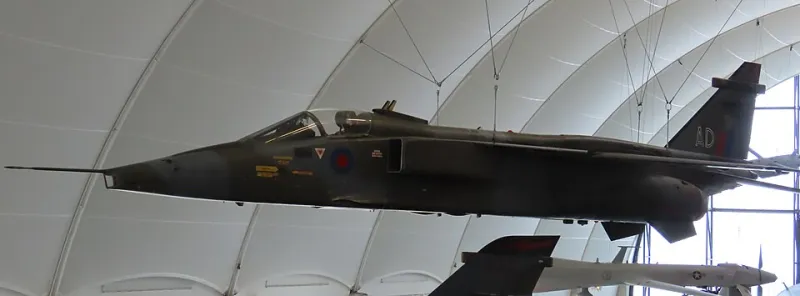
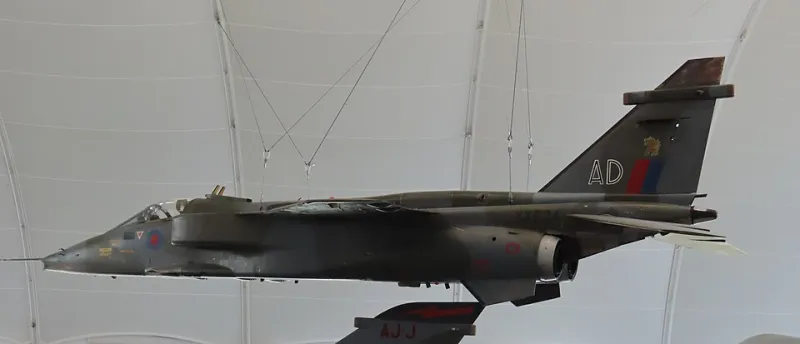
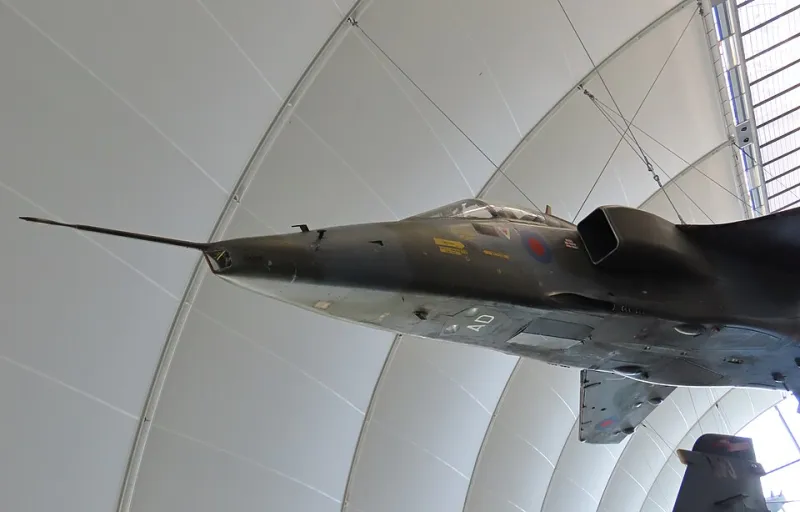
Five Jaguar Claims That Deserve a Second Look
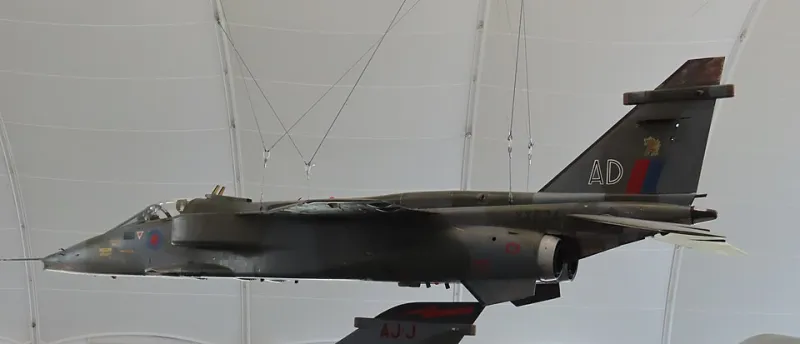
Photo: [[User:Ad Meskens|Ad Meskens You are free to use this picture for any purpose as long as you credit its author, Ad Meskens. Example: © Ad Meskens / Wikimedia Commons If you use this work outside of the Wikimedia projects, a message or a copy is
The Jaguar has a secure place in British aviation memory, but affection has a way of producing shorthand. A few claims about the aircraft now circulate so widely that they are repeated as settled fact. Some contain a grain of truth; others confuse design choice with failure. The following five reassessments are intended neither as a demolition nor as a defence. They are an attempt to separate genuine limitations from the myths that have hardened around them.
Claim One: The Jaguar Was Short-Ranged by Design
The claim is usually phrased as a verdict: the Jaguar could not reach much beyond its own airfield without tanks. That is an exaggeration, but it rests on a real characteristic. The Jaguar was designed as a tactical strike aircraft with modest internal fuel for its role. Its combat radius depended heavily on profile, stores, external fuel and air-to-air refuelling. Internal fuel alone is a poor measure of operational reach.
Archive records and squadron experience show that the aircraft was routinely operated with external tanks and, where required, refuelling support. The myth conflates a tactical design assumption with an absolute range limit. The Jaguar was not a long-endurance patrol aircraft, and it never pretended to be. Judged against contemporary light strike aircraft, its reach was credible when the mission was planned properly. The corrective point is simple: range is a configuration and profile question, not a single number attached to the airframe.
Claim Two: The Engines Were Underpowered
This is one of the most persistent claims. The Adour was a compact afterburning turbofan, and the Jaguar was not a fighter in the air-superiority sense. Critics point to acceleration, hot-and-high performance and comparison with later types. Those comparisons are real, but they often ignore the aircraft's intended role and the era of its design.
Squadron testimony suggests that the engines were considered adequate for the tactical strike task, particularly at low level and with a sensible stores load. The twin-engine layout provided redundancy and gave the aircraft a useful margin of safety. Where the claim becomes misleading is in the implication that the Jaguar was dangerously underpowered in all conditions. It was not. It was a strike aircraft with thrust growth limitations, and those limitations mattered most in demanding profiles. That is a technical judgement, not a myth.
Claim Three: Export Failure Was a Product Problem
The Jaguar did not achieve the export success of some contemporaries, and the temptation is to blame the aircraft. The historical record is more complicated. Export campaigns were shaped by consortium politics, offsets, pricing, training packages, local industrial participation and the availability of competing types. The Indian licence programme was a major success, but it was also a political and industrial arrangement as much as a simple sales victory.
To describe the Jaguar as an export failure is to mistake market outcomes for engineering verdicts. The aircraft had genuine export appeal where the requirement matched its strengths: ruggedness, low-level strike capability and a well-defined support package. The limitations were often commercial and diplomatic rather than aerodynamic. The myth hardens because enthusiasts prefer a single cause. The archive evidence points to a more distributed explanation.
Claim Four: The RAF Retired the Jaguar Because It Was Obsolete
The Jaguar left RAF service in 2007, and the retirement is sometimes presented as a technical judgement on the aircraft. In reality, fleet drawdowns are rarely that clean. The decision sat within a wider defence review context, with pressure from newer types, budget priorities and changing operational demands. The Jaguar had been upgraded and remained capable in several roles, but capability is not the only factor in retirement.
Squadron experience also complicates the word obsolete. The aircraft was demanding to maintain and its systems were ageing, but it was still generating operational sorties until the end. The corrective point is not that the Jaguar was young. It is that retirement timing reflects political, financial and fleet-management decisions as much as technical deficiency. The myth flatters hindsight by turning a programme decision into a verdict on the airframe.
Claim Five: The Jaguar Was a Maintenance Hog
Groundcrew testimony often includes hard words about the Jaguar's servicing burden. It was labour-intensive, and its systems required skilled trades and disciplined documentation. But maintenance hog is a loaded phrase. It implies that the aircraft was unusually unreliable or that it consumed resources without return. The archive record is more nuanced.
Jaguar line servicing was demanding because the aircraft was complex for its generation and because operational generation placed a premium on availability. Detachment stories reinforce the reputation, but they also show that the aircraft could be sustained in austere conditions by well-drilled teams. The real issue was trade skill and depth of support, not inherent fragility. The myth survives because maintenance anecdotes are vivid and engineering statistics are dull. Appreciation of the Jaguar should include both.
The Value of a Second Look
The Jaguar had genuine limitations: modest internal fuel, thrust growth constraints, a demanding support environment and a retirement shaped by factors beyond the aircraft itself. It also had real strengths: ruggedness, low-level handling, twin-engine redundancy and a design that matched its tactical role. The myths persist because they simplify a complicated aircraft. A second look does not diminish the Jaguar. It makes the appreciation more accurate.