The Runway Bargain: RAF Jaguar Sound, Local Consent and the Airfield Next Door
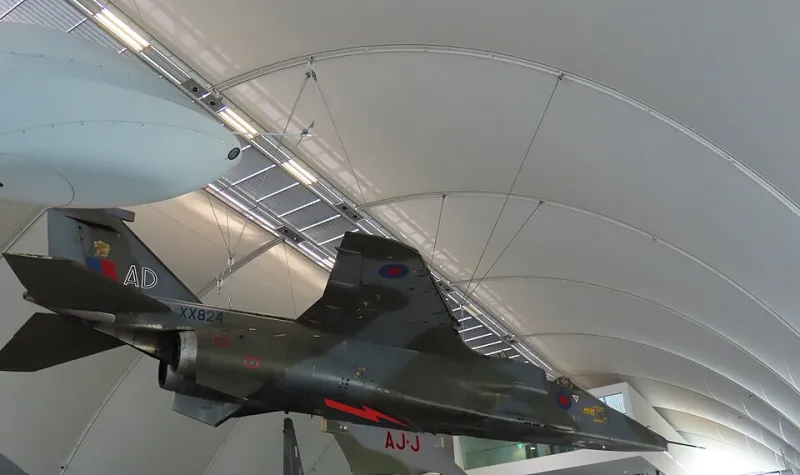
Photo: [[User:Ad Meskens|Ad Meskens You are free to use this picture for any purpose as long as you credit its author, Ad Meskens. Example: © Ad Meskens / Wikimedia Commons If you use this work outside of the Wikimedia projects, a message or a copy is
A Station Is Also a Neighbour
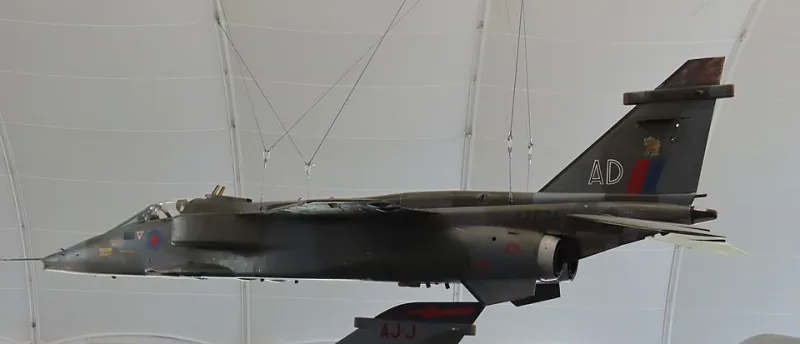
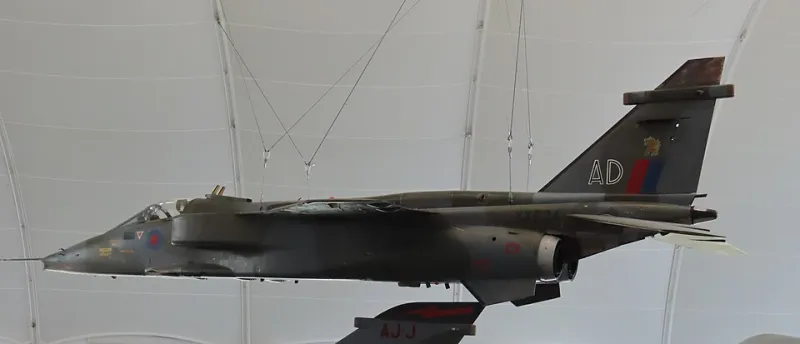
For enthusiasts, the RAF Jaguar is often remembered through the things that can be photographed: the squat stance, the high-mounted wing, the twin Adour exhausts and the businesslike clutter of stores beneath the fuselage. For the communities around stations such as Coltishall, Lossiemouth and the RAF Germany bases, memory is frequently organised differently. It is organised by sound. The Jaguar arrived as a neighbour as much as an aircraft, and its operating pattern — launch, climb, low-level transit, recovery, circuit work and the occasional display — made the type part of the local acoustic weather.
That is not a sentimental point. Airfield noise is a political subject because it is a shared one. It crosses the boundary fence, enters gardens, classrooms and hospitals, and attaches itself to the routine hours of people who have no professional stake in aviation. For the Jaguar force, the consequence was that sound became an operational constraint: a factor in scheduling, in public relations, in the selection of display manoeuvres and, at times, in the viability of particular training patterns. The runway bargain was never written down in a single document. It was negotiated continuously.
The Adour Signature
The Jaguar's acoustic character came from a combination of airframe and engine behaviour. The Adour was a compact turbofan, but in afterburner it produced the hard, carrying note that became familiar at the ends of runways and along low-level routes. The type's role reinforced the effect. A strike aircraft training for low-level delivery does not spend all its time at height; it spends useful time close to the ground, where sound is reflected, channelled and prolonged by terrain and weather.
Acoustic context matters here. A single sortie may be brief, but a squadron day is cumulative: engine runs at dispersal, taxiing, take-off, recovery, circuit training and maintenance ground runs. The individual event that a resident notices is often not the one the station records as significant. Station logs count movements; neighbours count interruptions. The gap between those two ledgers is where much of the politics of sound developed.
Complaints, Committees and Curfews
Local testimony from the Jaguar years tends to divide into two kinds of recollection. There are those who remember the aircraft with affection — the sight of a camouflaged jet over the Norfolk coast, the sound of a display at a families' day, the reliable rhythm of station life. And there are those who remember the intrusion: early departures, evening circuits, the particular irritation of a ground run on a still Sunday morning. Both are genuine, and neither cancels the other.
Station records and local authority papers from the period show the usual machinery of airfield relations: complaints logged, responses drafted, consultative meetings attended. The details varied by base, but the themes were consistent. Residents wanted predictable quiet; stations wanted predictable training. Curfews and voluntary restrictions could protect the most sensitive hours, but they also compressed activity into narrower windows. A squadron might accept a ban on evening circuits, then find its training programme squeezed into daylight already contested by weather and aircraft serviceability.
The Jaguar force was not unique in facing this, but its operating style made the argument sharp. Low-level training was central to the role, and low-level training is difficult to silence. Moving sorties elsewhere merely relocated the problem. Reducing them risked the standard of aircrew preparation. The result was a familiar defence-aviation dilemma: the public good of military capability was real, but so was the public nuisance, and the two were experienced by different people in different ways.
Display Diplomacy
If sound was a problem at the perimeter, it was also an instrument of diplomacy. Flying displays gave the Jaguar a controlled platform for public engagement. At station open days and civic events, the afterburner run and the low pass were not merely spectacle; they were arguments. They demonstrated capability, reassured taxpayers and gave local people a framed, anticipated encounter with the aircraft rather than an unexpected one over the house.
That distinction is important. A display is consented noise. It arrives with a programme, a commentary and a reason. A training sortie is operational noise, and its timing is governed by tasks rather than audience. Communities often tolerated the first while resenting the second. The Jaguar's public role therefore depended on more than good flying; it depended on the station's ability to explain why the aircraft was there and when it would be heard.
The Heritage Run and the Permission Slip
In 2026, the Jaguar survives in Britain mainly as a preserved airframe and a memory. Taxi runs and heritage events allow the Adour to be heard again, but they do so under a different social contract. Modern event organisers work within noise management plans, local authority conditions and the expectations of communities that have long since adjusted to quieter airfields. The sound that once belonged to routine military operations is now a scheduled heritage experience.
That does not diminish it. It simply places it in context. The preserved Jaguar run is not a return to the 1980s; it is a negotiated echo. It owes its existence to the same principles that governed the aircraft's operational life: anticipation, explanation and consent. The runway bargain has changed hands, but it has not disappeared. The neighbours still matter, and the sound still carries beyond the fence.