School for the Low Level: 226 OCU and the Making of a Jaguar Crew
A Pipeline Rather Than a Filter
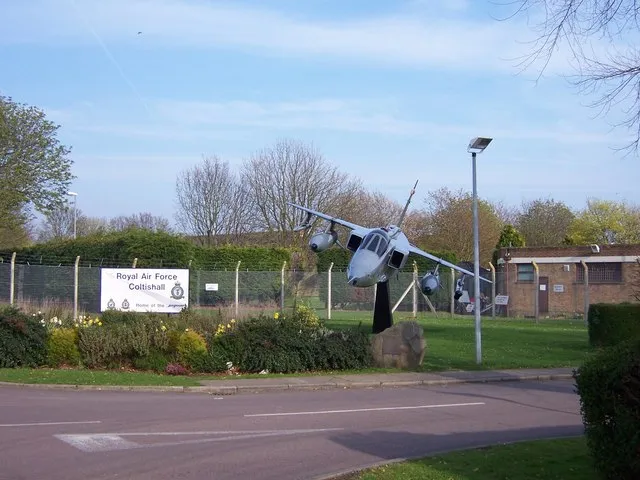
The Jaguar force did not receive fully formed crews. It received pilots who had already earned their wings, often on the Hawk or the Hunter, and then asked them to learn a very particular way of operating: fast, low, laden and frequently far from home. No. 226 Operational Conversion Unit at Lossiemouth was the formal bridge between those two worlds. Its task was not simply to teach switches and speeds. It was to impose a rhythm, a set of tolerances and a professional vocabulary that would follow a crew to Coltishall, Bruggen or further afield.
The OCU occupied an ambiguous place in the RAF training system. It was a school, but a school with live weapons, operational airfields and a syllabus written around the demands of RAF Germany. Students arrived with enthusiasm and left with a conversion certificate; in between, the unit had to decide whether they could be trusted with a low-level strike aircraft in a squadron environment. That judgement was rarely dramatic. It was built from daily sorties, ground briefs, simulator sessions and the quiet accumulation of evidence.
Ground School Before the Ground Rush
The course began on the ground, and for good reason. The Jaguar's systems were not exotic by later standards, but they were dense enough to punish a crew that treated the aircraft as a simple bomb truck. Students worked through engines, fuel, hydraulics, electrical distribution, navigation and weapon delivery. The aim was not to produce systems engineers but to ensure that a pilot could diagnose a problem at 420 knots and 250 feet without reaching for a manual.
Ground school also introduced the language of the Jaguar force. Instructors spoke about sortie profiles, fuel states, recovery options and the particular discipline of operating from short strips. A former student recalled that the most valuable lessons were not the headline performance figures but the small procedural habits: how to brief a low-level route, how to manage a diversion, how to admit in a debrief that a sortie had gone badly. The OCU was where those habits were either formed or exposed.
Two Seats, One Syllabus
The two-seat Jaguar was central to the conversion. The T.2 and later the T.4 gave instructors a platform to demonstrate, monitor and correct in real time. A student could fly the aircraft from the front seat while the instructor watched the taller picture; alternatively, the instructor could take control and talk a student through a recovery or an attack profile. The arrangement was not unique to the Jaguar, but the aircraft's low-level role made the rear seat especially valuable. Errors happened quickly at low altitude, and the two-seat syllabus allowed those errors to be discussed rather than simply survived.
Sorties were progressive. Early flights concentrated on handling, circuit work and emergency drills. Later profiles introduced navigation at low level, formation work and weapon delivery. The syllabus was demanding but deliberately incremental. Instructors looked for consistency rather than flashes of brilliance. A student who could fly a neat display but could not brief a complex sortie was not yet a Jaguar crew.
The Simulator as a Rehearsal Room
The simulator was not a substitute for flying, but it was an efficient rehearsal room. It allowed crews to practise emergencies that would have been unsafe or prohibitively expensive in the air: engine failures after take-off, hydraulic malfunctions, navigation system degradation and complex weapon deliveries. Simulator sessions also exposed the procedural side of conversion. Instructors could freeze a scenario, ask a student to explain a decision and then rewind to the moment where the decision had begun to go wrong.
For many students, the simulator was where the course became cerebral. Flying the aircraft was one challenge; managing a sortie while something else was failing was another. The Jaguar force needed crews who could keep a low-level profile under control while dealing with a distraction. The simulator was one of the few places where that skill could be practised without real risk.
Standards, Sign-offs and the Handover
The OCU's influence extended beyond individual students. It set standards that front-line squadrons inherited. Instructors rotated between the OCU and operational units, carrying lesson patterns with them. A debrief technique developed at Lossiemouth might reappear at Coltishall; a particular approach to low-level briefing could become a squadron norm. In that sense the OCU was not a separate world but a working part of the Jaguar force's professional memory.
The later transfer of the training task to 16(R) Squadron preserved the pipeline while changing its administrative identity. The syllabus remained recognisably the same in spirit: ground school, two-seat flying, simulator work and a final assessment that looked less for perfection than for reliable judgement. Students who passed did not leave as finished article; they left as crews who could be trusted to learn safely in a squadron.
What the Course Left Behind
The Jaguar's retirement did not erase the OCU's legacy. Former instructors still speak about the course in terms of standards rather than nostalgia: the importance of a honest debrief, the value of a well-briefed low-level route, the need to keep procedural discipline when the sortie starts to unravel. Those lessons were not unique to the Jaguar, but the aircraft gave them a particular edge. Low-level strike flying leaves little margin for casual habits.
For the archive, the OCU story is a reminder that the Jaguar force was not simply a collection of airframes and squadrons. It was a training system with its own routines, characters and institutional memory. The conversion course was where that system met the individual pilot, and where the RAF decided who would carry the Jaguar's low-level reputation into the next squadron.