Forward, Low and Loaded: RAF Germany's Jaguar Squadrons in the Front Line
RAF Germany's Jaguar force has never quite had the public afterlife of the Coltishall wing. That is understandable. Coltishall was the type's last RAF home, the backdrop to retirement schemes and preservation photographs, and the place many enthusiasts associate with the Jaguar's final chapter. But the front-line story belongs as much to the flat, wooded and often grey landscape around RAF Bruggen, where the Jaguar stood on NATO's Central Front during the 1970s and 1980s.
A Different Kind of Jaguar Station
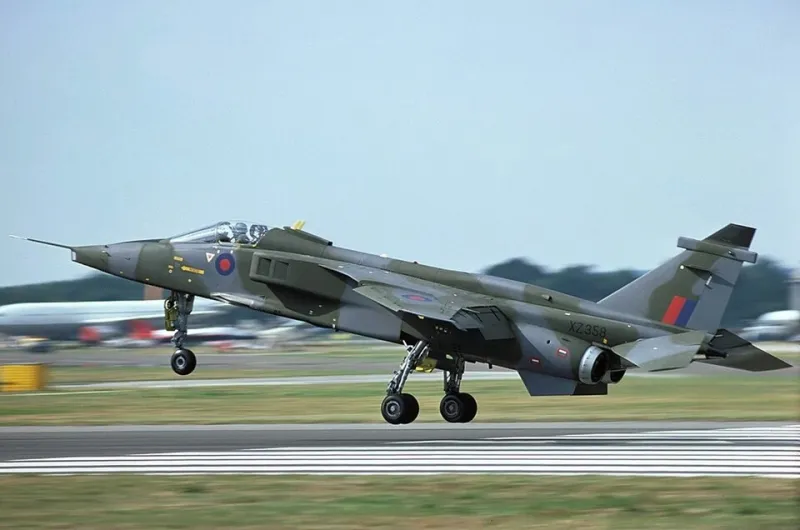
At Bruggen the Jaguar was not a training asset or a nostalgic exhibit. It was part of RAF Germany's contribution to NATO's Second Allied Tactical Air Force, a strike force expected to operate at low level, in poor weather and against a densely defended battlefield. The squadrons at the station, with 14 and 17 Squadrons the best remembered and 20 and 31 also operating the type from Bruggen during the period, trained for conventional interdiction, close air support and the wider NATO strike task. Their aircraft wore camouflage, carried external tanks and stores, and lived in hardened aircraft shelters rather than on the comfortable display lines that later became familiar at airshows.
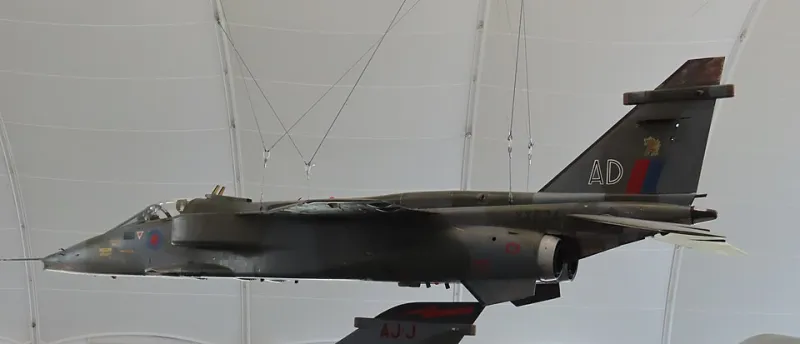
The difference in setting shaped the difference in reputation. Coltishall is remembered through final-year photographs, squadron markings and the melancholy of retirement. Bruggen is remembered, when it is remembered at all, through operational documents, exercise reports and the recollections of people who spent their working lives between shelter and flight line. That makes the RAF Germany chapter less photogenic but more revealing. It shows what the Jaguar was for.
The Mission Before the Mission
Low-level strike flying is often described in terms of speed and terrain, but the daily reality was preparation. A Jaguar sortie at 500 feet demanded a route study, a weapon-aiming plan, an awareness of surface-to-air threats and a clear idea of what the aircraft would do if the weather closed in or a system failed. The Jaguar's navigation and attack system gave the crew a means of managing that workload, but it did not remove it. The aircraft rewarded discipline and punished casual assumptions.
RAF Germany crews trained for a battlefield that was close to home. There was little of the strategic depth available to units based in the United Kingdom. A wartime sortie from Bruggen would have been short, dense and contested. That proximity influenced everything from scramble procedures to the way squadrons thought about survival. The Jaguar's speed and stores load had to be matched by a ground organisation that could generate sorties quickly and keep the aircraft serviceable under pressure.
The training pattern reflected the mission. Sorties were flown against simulated targets, often with the familiar constraints of range availability, weather and airspace. Crews practised low-level navigation, pop-up attacks, target acquisition and re-attack techniques. They also learned the less glamorous art of managing fuel. The Jaguar was a robust aircraft, but it was not a long-range bomber. External tanks were routine, and every stores combination involved a calculation about range, drag and weapon effect.
Lines, Shelters and the Winter Shift
Bruggen's infrastructure told the same story. Hardened aircraft shelters, squadron line buildings, weapon-loading areas and the constant movement of ground crews between shelter and flight line formed the visible geography of readiness. In winter the station could be bleak. Cold, damp weather made panel changes slower, hydraulic work more awkward and engine runs less pleasant. The shelter offered protection, but it also concentrated the work. A Jaguar inside a HAS was a compact maintenance problem: engines, avionics, hydraulics, armament and airframe all competing for attention in a confined space.
The Adour engines were rugged and gave the Jaguar useful thrust, but they demanded careful handling and routine inspection. The aircraft's systems needed calibration and testing. Turnarounds required coordination between armourers, technicians and aircrew, and the pace was set by the next wave rather than by the clock. A squadron day began before the first launch and ended after the last recovery, with debriefs, rectification and preparation folding into one another.
That culture is easy to overlook in histories dominated by aircraft types and squadron crests. Yet it was the human layer that made the front line credible. Line crews knew which aircraft were troublesome, which systems needed watching and which shelter teams worked fastest. Pilots knew the local weather patterns and the quirks of the routes. The squadron was a small organisation with a large amount of specialist knowledge, and its effectiveness depended on people who rarely appeared in the photograph.
Why This Chapter Matters
As the Jaguar archive looks back in 2026, the RAF Germany years deserve more attention than they receive. They explain why the Jaguar mattered to NATO, not merely why enthusiasts like it. They also provide a useful corrective to the Coltishall-centred view of the type. The Jaguar's final RAF chapter was important, but it was not the whole story. Before the retirement markings and the preservation campaigns, the aircraft was a front-line strike machine on the Central Front, operated by squadrons whose daily business was readiness.
The later transition to Tornado is part of that story too. The Tornado offered all-weather radar, terrain-following capability and greater range, and its arrival changed the balance of RAF Germany's strike force. The Jaguar's withdrawal from the German front line was therefore not a verdict on its qualities. It was a consequence of a changing operational requirement. The Jaguar had done the job it was given, at low level and at short notice, in a theatre where the margin for error was small. That is a chapter worth recording with the same care as the more familiar photographs of Coltishall.