The Home Base Argument: Coltishall, the Jaguar Force and a Campaign Out of Time
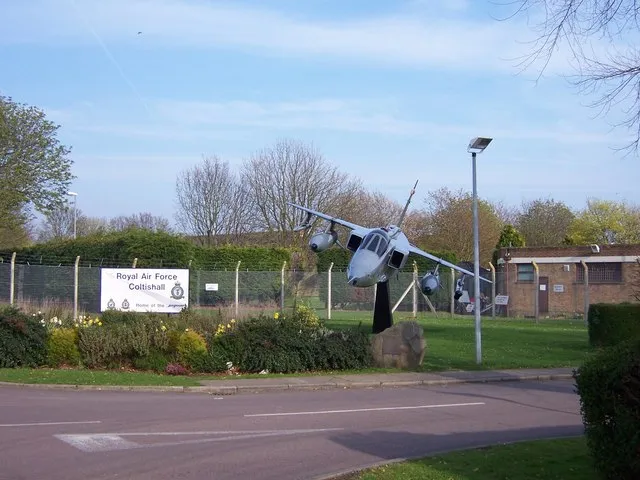
Photo: Jason Baxter, CC BY-SA 2.0, via Wikimedia Commons
For a generation of RAF Jaguar crews and engineers, Coltishall was not simply a station in Norfolk. It was the place where the aircraft’s squadrons, training machinery and engineering culture were concentrated, and where the Jaguar’s low-level, front-line identity was most visibly maintained. The campaign to preserve the base therefore carried an emotional charge that few defence-estate arguments can match. Yet by the time the closure was confirmed in the middle of the 2000s, the decision was already being shaped by factors that local advocacy could not easily reach: the shrinking Jaguar force, wider basing reviews and the logic of rationalising an estate under financial pressure.
A station identified with a type
RAF Coltishall’s association with the SEPECAT Jaguar was close enough that the two names became shorthand for one another in enthusiast circles. The station hosted Jaguar squadrons and the training and support organisation that sustained them, and its public events and local press coverage reinforced the connection. For people living near the airfield, the Jaguar was part of the soundscape and the local economy; for the RAF, Coltishall was a working base with runway, hangar and training assets that had been adapted to a demanding low-level strike and reconnaissance role.
That identity mattered, but it also created a trap. A base can become famous for one aircraft without becoming immune to decisions taken about that aircraft’s future. As the Jaguar force contracted, the number of units and airframes available to justify Coltishall’s infrastructure fell. The station’s fame as a Jaguar home could not by itself answer the harder questions about how many bases the RAF needed, how much estate it could afford and where future operational demand would be concentrated.
The campaign in the local sphere
The campaign to keep Coltishall open was fought largely in the language of local consequence. Petitions, letters to newspapers, council motions and constituency representations emphasised jobs, regional investment and the station’s place in Norfolk’s social fabric. The slogan ‘Save Coltishall’ captured a genuine breadth of feeling, and the campaign drew support from people who were not aviation enthusiasts but who regarded the base as a fixed point in the local landscape.
These arguments were legitimate. Defence establishments are economic and social actors as well as military ones, and closures fall heavily on nearby communities. But local campaigns often struggle when the decision they oppose is framed as a national force-structure question. A petition can demonstrate depth of feeling; it cannot easily reopen a programme that has already been judged against Treasury pressure, future equipment plans and the shape of the RAF as a whole. The Coltishall campaign was therefore operating in a space where public support was real but where the decisive levers lay elsewhere.
The operational case and its limits
Supporters also advanced operational arguments. Coltishall’s location, its facilities and its established Jaguar infrastructure were presented as reasons to retain the station even as the wider force changed. There was a reasonable case that a base with a long record of supporting the Jaguar should not be discarded lightly, and that the cost of moving or rebuilding comparable capacity might offset some of the savings claimed for closure.
Yet the operational argument ran into an unavoidable difficulty: the Jaguar itself was approaching the end of its RAF career. The aircraft’s retirement was already on the horizon, and the force was being drawn down. Keeping Coltishall as the Jaguar home would have preserved a base for a type that was leaving service. The campaign could argue for the station’s value, but it could not easily overturn the wider decision that the Jaguar force would not continue in its existing form. In that sense, the campaign was not merely fighting the defence estate; it was fighting a timetable.
What the closure revealed
The Coltishall decision exposed a persistent tension in RAF basing logic. Stations acquire identities through their aircraft, their people and their local relationships, but they are ultimately judged through a national framework of operational need, estate cost and force structure. A base can be intensely associated with a type and still be closed when the type’s future changes. That is not necessarily a failure of local advocacy; it is a reminder that local campaigns and national defence planning operate on different clocks.
The episode also showed how quickly a station’s operational identity can be separated from its physical future. Once the flying units depart, the hangars, dispersals and married quarters become part of a different kind of debate: redevelopment, heritage and memory. For enthusiasts, the closure was a loss of access and atmosphere. For the local area, it was an economic and administrative adjustment. For the RAF, it was one line in a broader estate rebalancing that continued long after the last Jaguar left.
The legacy in 2026
By 2026, Coltishall is remembered less as a live base than as a case study in how aviation heritage is argued over. The station’s Jaguar years survive through photographs, unit histories, oral testimony and the persistent use of the name as shorthand for a particular phase of RAF low-level operations. The former site has moved on, as former airfields must, but the enthusiast record has kept the flying era in view.
That record matters because it preserves more than nostalgia. It documents the operational case that was made, the local response that was organised and the national decisions that ultimately prevailed. For the SEPECAT Jaguar Archive, Coltishall is a reminder that base histories are not only about aircraft and squadrons; they are also about political timing, public memory and the difficulty of preserving a working military identity after the work has gone elsewhere.