Low-Level Deterrent: The Jaguar Force's Nuclear Assignment in Germany
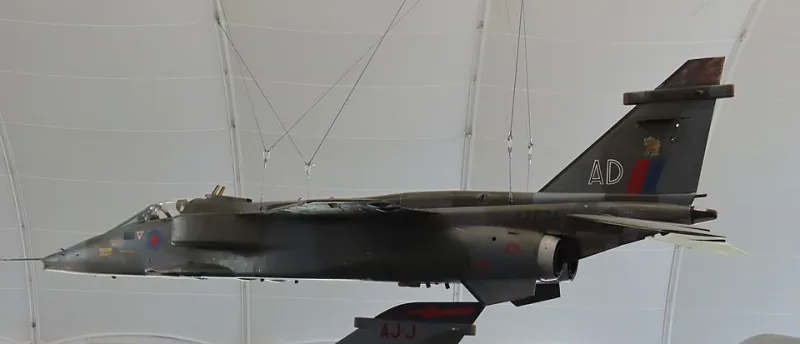
Photo: [[User:Ad Meskens|Ad Meskens You are free to use this picture for any purpose as long as you credit its author, Ad Meskens. Example: © Ad Meskens / Wikimedia Commons If you use this work outside of the Wikimedia projects, a message or a copy is
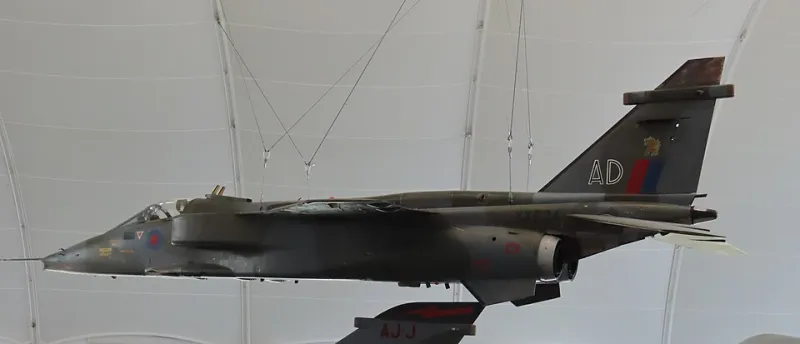
The SEPECAT Jaguar entered RAF service with a reputation built around speed, low-level handling and a useful conventional payload. That is the aircraft most enthusiasts recognise: the camouflaged strike fighter skimming across the North German plain, its loadout a careful compromise of bombs, rockets, fuel and reconnaissance equipment. Yet for a substantial part of its RAF Germany career, the Jaguar force also held a second and far less visible assignment. It was a tactical nuclear strike commitment, assigned to NATO and exercised within the routines of the squadrons that flew the type.
That role is not a secret in the archival sense. It appears in squadron histories, in NATO planning documents, in memoirs and in the technical literature. What is often missing is proportion. The nuclear mission was neither the Jaguar's only purpose nor an occasional ceremonial attachment. It was a real operational commitment, with its own training burden, security arrangements and influence on how the aircraft was flown and maintained. At the same time, it was not a mission that every Jaguar airframe or every squadron flew every day. The truth sits between those extremes.
A role written into the order of battle
In the Cold War structure of RAF Germany, the Jaguar squadrons formed part of the forward deployment that NATO relied upon to deter, and if necessary meet, a Warsaw Pact advance. Their conventional task was demanding enough: low-level interdiction, close air support and armed reconnaissance in a crowded and heavily defended battlespace. The nuclear commitment sat alongside that conventional work. Aircraft and crews were assigned to NATO's tactical nuclear strike plan, with the Supreme Allied Commander Europe as the operational authority within the alliance's arrangements.
The important distinction is between a squadron's full conventional output and its nuclear alert commitment. The Jaguar force did not spend its entire existence waiting for a nuclear release order. Squadrons trained for conventional war, mounted exercises, deployed on detachments and maintained the ordinary rhythm of flying. The nuclear task was a specialist strand within that wider organisation. It required nominated crews, specific aircraft and a readiness system that could be brought to higher states when the political and military situation demanded it.
For the historian, this makes the nuclear role easy to overstate or underplay. Overstate it and the Jaguar becomes a bomber sitting on permanent nuclear alert, which misrepresents the conventional record. Underplay it and the archival evidence from RAF Germany looks inexplicable: the security procedures, the inspections, the recurrent training and the particular language of NATO alert states all point to a mission that mattered.
The weapon in plain terms
The British weapon most closely associated with this assignment was the WE.177A, a tactical nuclear bomb designed for laydown delivery. In simple terms, a laydown weapon is released at low level and retarded so that the aircraft can escape the blast area before detonation. That profile suited the Jaguar's operating environment. The aircraft was already optimised for low-level ingress and egress, and the nuclear task reinforced those same skills rather than demanding a completely different style of flying.
The WE.177A was a national British weapon assigned to NATO for planning purposes. It is often described in popular accounts as a "dual-key" weapon, borrowing language from the United States nuclear-sharing programme. That is misleading in the British context. The custody, consent and release arrangements were not a simple copy of the American model. They involved national authority as well as NATO command arrangements, and the precise procedures were necessarily classified. What can be said is that release was not a squadron-level decision. It sat within a political and military chain that reflected both the United Kingdom's national control and its alliance commitments.
Public discussion of yields and effects often runs ahead of the documented record. The WE.177 family had variable yield settings, and the tactical variant was intended for battlefield use rather than strategic bombardment. But the Jaguar's nuclear mission should not be reduced to a debate about kilotons. The more revealing history is about preparation: how crews trained for a sortie they could not routinely fly, how aircraft were configured and inspected, and how squadrons maintained confidence in a procedure that depended on absolute certainty.
Training for a mission that could not be rehearsed
Conventional strike training can be practised with live weapons on ranges. Nuclear strike training cannot. Crews therefore relied on simulators, procedural training, mock-up stores, ground exercises and the repeated rehearsal of navigation, timing and release profiles. The flying task was familiar in outline: low-level ingress, target acquisition, weapon release and escape. The difference lay in the standards applied. Nuclear surety demanded documentation, inspection and command oversight that went well beyond the ordinary business of loading conventional bombs.
Squadron life reflected that. Security was tighter around particular areas. Movements of special stores, or of the equipment associated with them, followed strict procedures. Inspections could arrive without warning. NATO exercises tested the ability of the force to generate aircraft and crews against a timetable, and the Jaguar squadrons' conventional readiness was measured alongside their nuclear commitment. For the ground crew, the nuclear role added a layer of accountability that had little to do with the glamour of fast jet flying. It was a world of signatures, checks and re-checks.
This is where the Jaguar's nuclear story becomes more than a footnote. It explains why RAF Germany's Jaguar force was organised with a certain seriousness that outsiders sometimes missed. The aircraft was small, agile and relatively simple compared with some of its contemporaries, but the mission it could be called upon to perform was not simple at all.
How the commitment shaped the conventional jet
A common assumption is that nuclear and conventional roles are separate worlds. In practice, they overlap. The Jaguar's nuclear assignment reinforced the low-level, all-weather navigation skills that also underpinned its conventional interdiction work. Crews who could manage the timing and terrain-following discipline of a nuclear profile were well prepared for conventional low-level attack. The aircraft's systems, particularly its navigation and weapon-aiming equipment, had to support precise delivery under demanding conditions regardless of the store carried.
The commitment also influenced the force's overall readiness culture. Squadrons could not treat conventional training as a separate, relaxed activity while maintaining a credible nuclear capability. The same crews, the same engineers and often the same aircraft moved between tasks. That created a force that was used to high standards of procedural discipline, even if the public image of the Jaguar remained that of a robust conventional bomb truck.
There were constraints as well. Nuclear-certified aircraft and crews had to be managed within the wider fleet, and the security and inspection regime absorbed time and attention. The Jaguar force was never large, and every additional commitment mattered. The fact that RAF Germany's Jaguars managed both conventional and nuclear tasks reflects the way Cold War air forces planned for a short, intense war in which the distinction between conventional and nuclear thresholds might collapse very quickly.
Myth, memory and the archive
In 2026, the Jaguar has been out of RAF service for more than a decade and the nuclear mission has passed into the hands of other aircraft and other arrangements. That distance makes the archival work more important, not less. Anecdote tends to fill the gaps. One recurring myth is that every Jaguar squadron was permanently poised for a nuclear sortie. Another is that the nuclear role was a paper commitment with little effect on daily life. Neither stands up to scrutiny.
The documented picture is more interesting. A defined part of the Jaguar force held a NATO tactical nuclear commitment, trained for it within the limits of what could be rehearsed, and maintained the security and procedural standards the mission demanded. That commitment sat alongside the conventional low-level role that has come to define the Jaguar in popular memory. The two were not rivals. They were two sides of the same Cold War assignment, and the aircraft's low-level character served both.
For the archive, the lesson is to read the Jaguar's German years as a whole. The conventional sorties, the squadron routines and the nuclear alert arrangements belong to the same history. The other payload was not the whole story, but it was never merely a footnote.