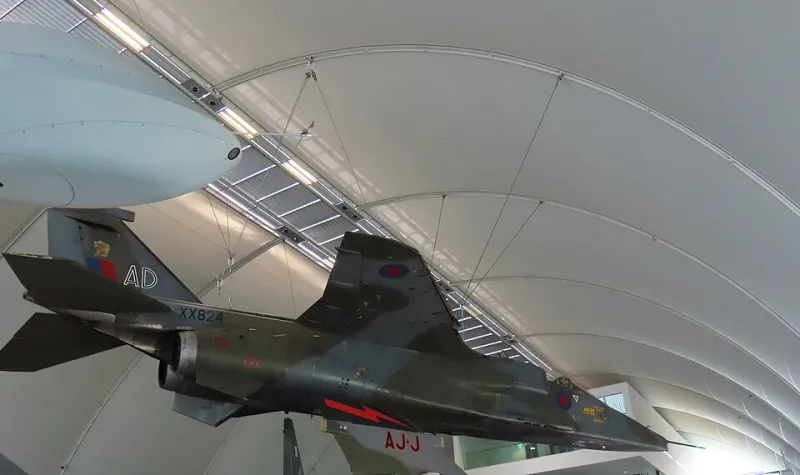
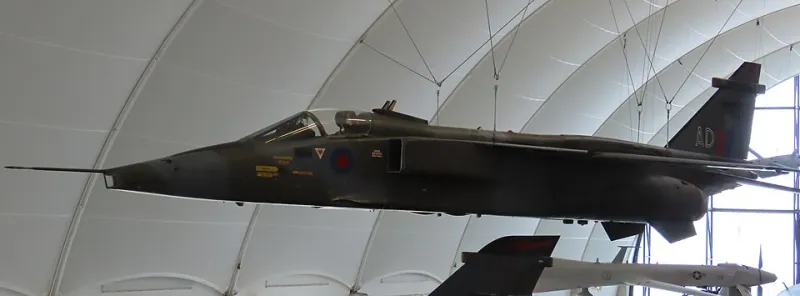
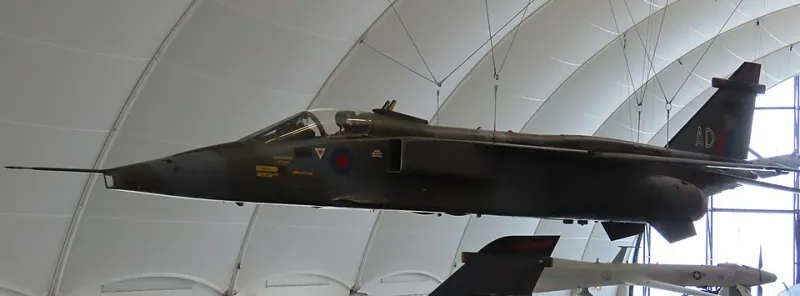
Cloudbase, Crosswind, Contingency: Flying the Jaguar Through the British Climate
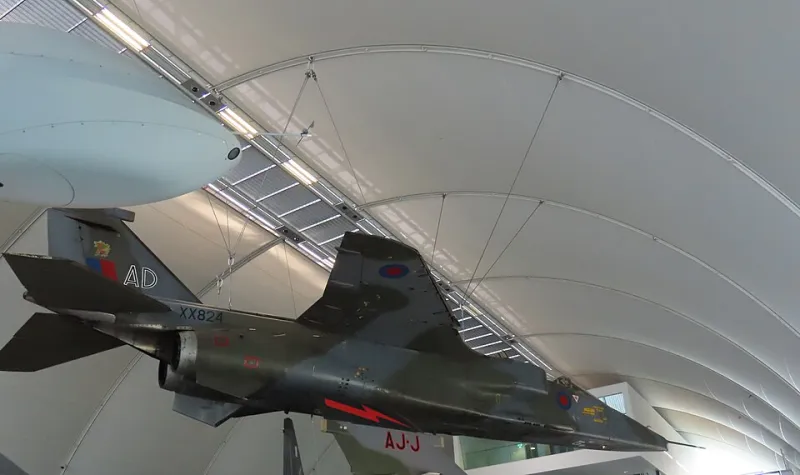
Photo: [[User:Ad Meskens|Ad Meskens You are free to use this picture for any purpose as long as you credit its author, Ad Meskens. Example: © Ad Meskens / Wikimedia Commons If you use this work outside of the Wikimedia projects, a message or a copy is
On a November morning at RAF Coltishall, the fog that rose from the Yare valley could make a familiar airfield disappear by the time a crew reached the hardening. For the Jaguar force, such mornings were not an inconvenience to be endured but a problem to be solved in writing, in fuel figures and in the maintenance hangar. The aircraft was a low-level strike machine with demanding approach characteristics; the British climate supplied the variables. The result was a discipline that sat between meteorology, engineering and command judgement.
The Limit Is a Document Before It Is a Decision
RAF flying is governed by orders, and the Jaguar was no exception. Station flying orders, squadron instructions and the air traffic control manual translated weather into minima: cloudbase and visibility for visual circuits, decision heights for instrument approaches, crosswind components and runway-state restrictions. These were not abstractions. They defined whether a sortie could be authorised, whether a diversion was prudent and whether a crew should accept a forecast that was already deteriorating.
The Jaguar's approach was not forgiving by the standards of its generation. High wing loading, relatively high approach speeds and a single-seat workload meant that stable approaches mattered. The aircraft had no autothrottle to manage speed on the approach, and its nav/attack system was not a landing aid. In low cloud, the crew's scan was divided between instruments, the runway environment and the controller's voice. The published minima existed to keep that division manageable.
Fog on the Fen
Coltishall was especially exposed to the kind of radiation fog that forms on still autumn nights and lingers into the morning. Sea fog could arrive from the east; low stratus could sit over the county for days. The effect on flying was cumulative. Low-visibility taxiing required marshalling discipline, careful use of airfield lighting and a crew brief that covered the possibility of a missed turn on an unfamiliar taxiway. A sortie that launched into a promising forecast could return to find the home base below limits.
Diversion planning therefore began before start-up. The Jaguar's operational radius was finite, and tanking was an enabler rather than a cure. The alternate airfield had to be within reach, above minima and, crucially, still available. In Norfolk and Suffolk, the choice of diversion was shaped by weather geography as much as by distance: fog on one side of the region did not guarantee clear conditions on the other. Controllers and forecasters spoke in terms of trends, not certainties, and crews learned to read the difference between a forecast that was expected to improve and one that was merely hoped to.
Ice, Slush and the Runway State
Winter brought a second set of limits. Runway state reports described braking action, standing water, slush and ice. The Jaguar's braking parachute was a landing aid on dry runways; on contaminated surfaces the crew's attention moved to wheel braking, anti-skid behaviour and directional control. Crosswind limits were reduced when grip was uncertain. A runway that was merely wet in the morning could be a different airfield by the afternoon.
Ground de-icing was a further discipline. Holdover times, fluid concentration and the distinction between frost, snow and freezing rain all mattered. The Jaguar's intakes, pitot system and canopy demanded particular care. Ice on the airframe was not simply a drag penalty; it was a configuration problem. Groundcrew removed covers and blanks, checked static ports and inspected surfaces before releasing the aircraft. Snow clearance and FOD sweeps became part of the flying programme's critical path.
The Maintenance Weather
British conditions imposed a maintenance burden that is easily overlooked in histories of the Jaguar's operational career. Damp Norfolk air found its way into connectors and avionics bays; condensation formed in aircraft that had been cold-soaked overnight and then warmed in a hangar. Canopy seals and access panels were checked for water ingress. Ice and snow increased the time spent on pre-flight preparation and post-flight inspection. The groundcrew's day began earlier and ended later than the flying programme suggested.
Fog also changed the shape of the ground operation. Aircraft that could not fly still required attention; aircraft that diverted required recovery and onward servicing. A weather diversion was not the end of a sortie but the beginning of a maintenance and logistics problem that followed the airframe to another station.
Diversion as a Design Constraint
In this sense, weather exposed an operational truth about the Jaguar: it was a short-legged aircraft whose effectiveness depended on a system, not just an airframe. The system included forecasters, controllers, alternate airfields, tankers and groundcrews. When fog closed Coltishall and the German bases, the limits were felt across that system. Crews could train for instrument approaches; they could not train away the fuel equation. Commanders, meanwhile, balanced the risk of pressing on against the cost of losing a sortie or a training syllabus.
The archive record of these decisions is often mundane: a met brief, a diversion signal, a squadron diary entry. Read together, they show a force that treated weather as an engineering condition rather than a background nuisance. The Jaguar's British service was shaped as much by cloudbase and crosswind as by the low-level mission it was designed to fly.
As of 2026, the preserved airframes in museums and private collections no longer face those decisions. The flying orders and station records still do the work of explaining them. They remind the reader that every limit in the Jaguar's operating envelope encoded an experience, and every diversion was a judgement made in advance.